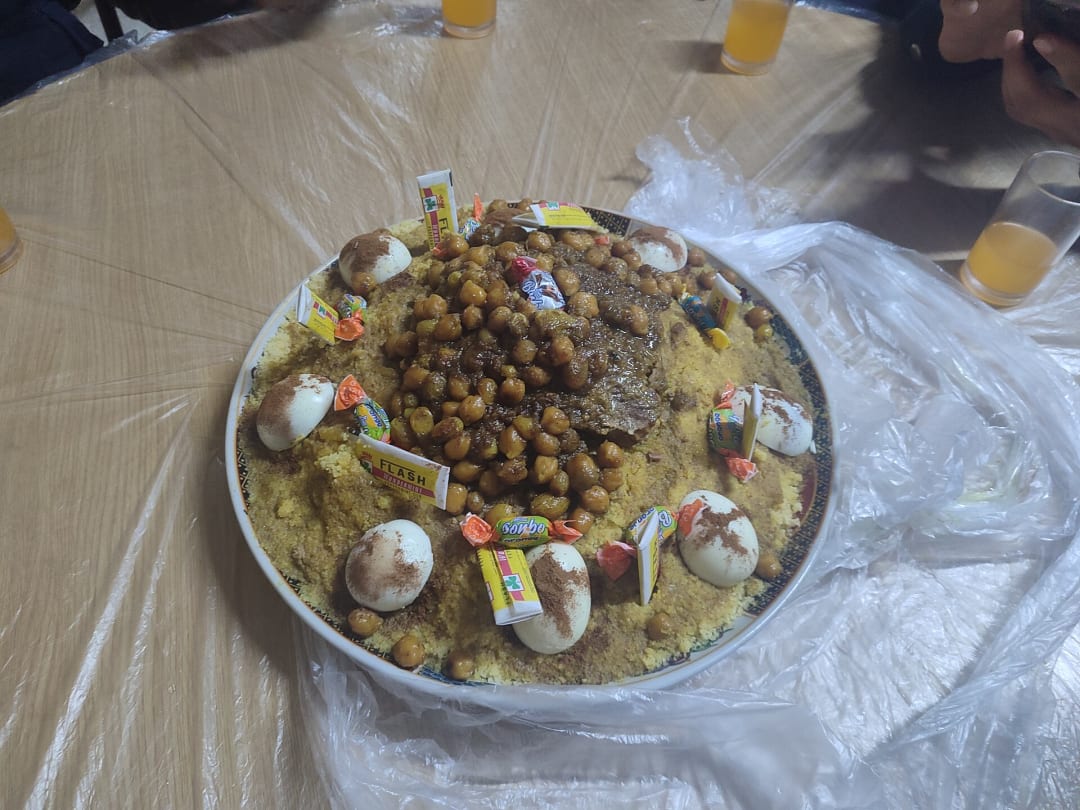
On 14 January 2027, Morocco will celebrate the year 2977. It is not a typo: it is Yennayer, the Amazigh New Year, the festival that opens the farming year of the Berber peoples of North Africa. Long celebrated within families in the mountains and the Souss, it became a national public holiday in Morocco in 2024. Where does this calendar come from? Why 14 January? What is eaten that night, and where can a traveller experience it? Here is everything you need to know before a winter stay in Marrakech and the Atlas.
Yennayer at a glance
- Date: the night of 13 to 14 January; 14 January is a public holiday in Morocco.
- Year: 2977 in January 2027 (add 950 to the Gregorian year).
- Meaning: the first day of the Amazigh farming year, a time of wishes for abundant harvests.
- Greeting: “Asggas amggaz!”, a happy and prosperous new year, also heard as “asggas ambarki”.
Why 14 January?
The name Yennayer comes from the Latin *ianuarius*, January. For centuries, North African farmers timed sowing, ploughing and harvests by the Julian calendar inherited from Roman times. That calendar is now 13 days behind ours: 1 January in the Julian calendar falls on 14 January in the Gregorian one. That is why the festival is held in mid-January, on the 13th or 14th depending on the region, and why Morocco chose 14 January as the public holiday.
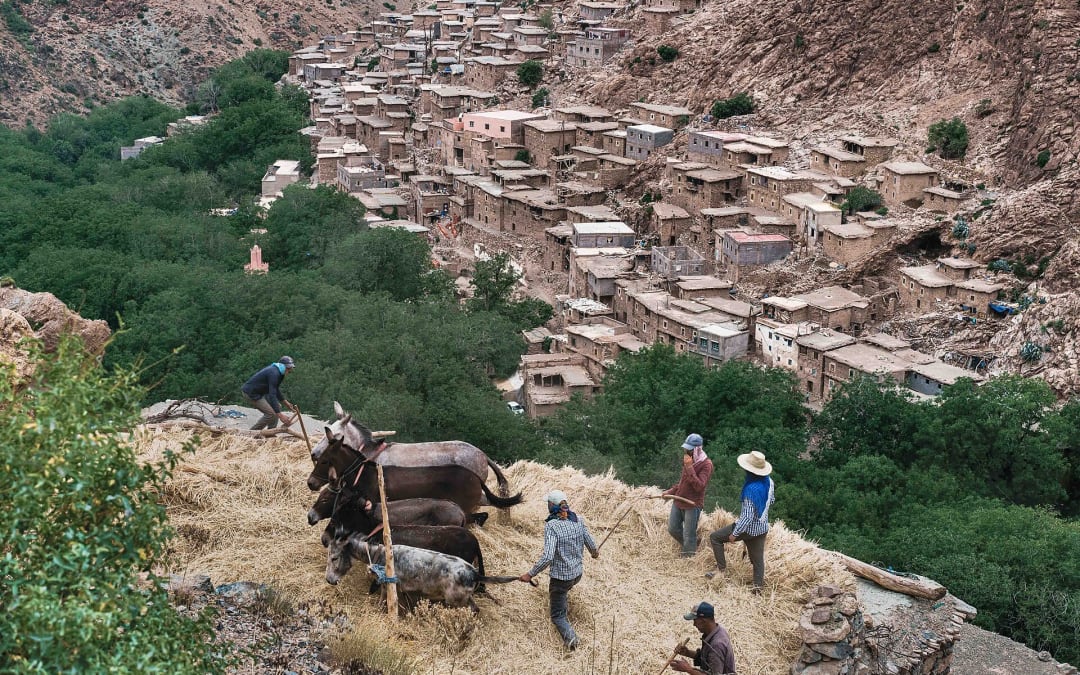
The months of this farming calendar have names close to the Latin months, and the seasons are marked by concrete signs: the period of the great cold, the return of the storks, the almond blossom… In High Atlas villages you can still hear older people dating farm work this way.
And why the year 2977?
The year count is more recent than the festival itself. In the second half of the 20th century, Amazigh cultural activists chose a symbolic starting point: 950 BC, when Sheshonq I, a leader of Libyan-Berber origin, became pharaoh of Egypt and founded the 22nd dynasty. It is a modern, militant reference rather than an age-old tradition, but it has been adopted across the Maghreb and gives Yennayer its meaning as a celebration of identity.
In Morocco, recognition came step by step: Amazigh has been an official language since the 2011 Constitution, the Tifinagh alphabet is taught and displayed on public buildings, and in 2023 King Mohammed VI decided to make the Amazigh New Year a paid public holiday, officially celebrated for the first time in January 2024.
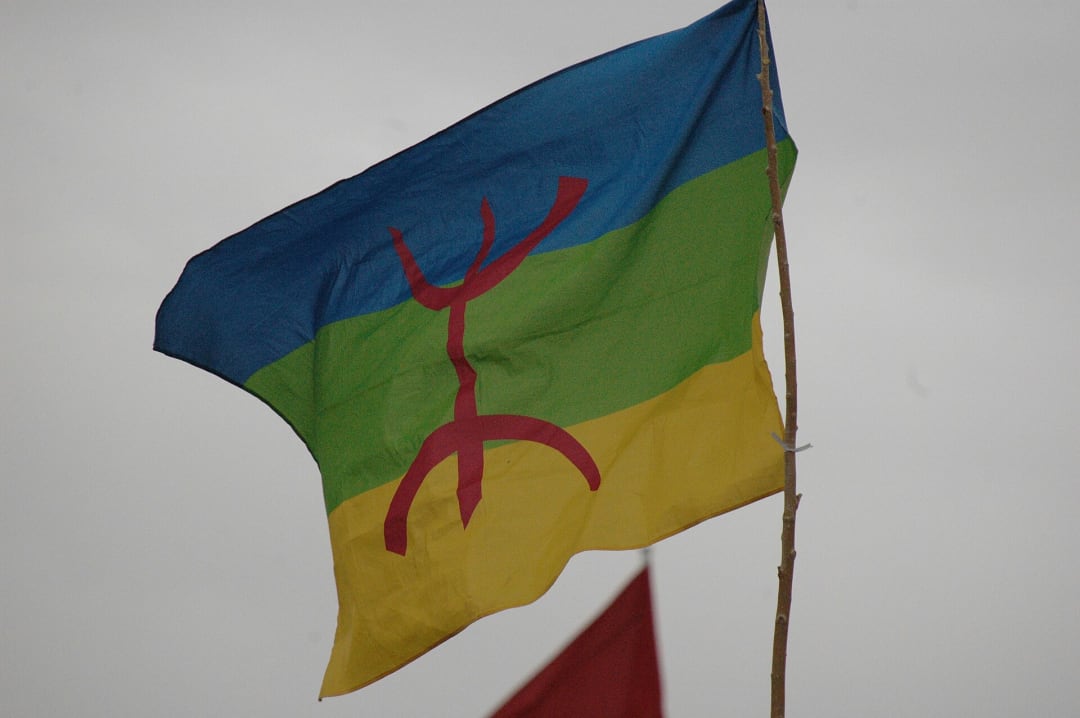
The flag you will see that day is the Amazigh flag: blue for the sea, green for the mountains and plains, yellow for the desert, and in the middle the red letter ⵣ (yaz), the symbol of “the free man”.
What is eaten at Yennayer
Yennayer is first of all a family meal, often called the Yennayer dinner. The menu varies from one region and one family to another, but some traditions keep coming back:
- Seven-vegetable couscous, the festive dish par excellence: seven seasonal vegetables for seven wishes of prosperity.
- Tagoula, a thick barley or maize porridge served with butter, honey or argan oil, especially in the Souss and the Anti-Atlas.
- The lucky stone: a date stone or an almond is hidden in the dish. Whoever finds it is said to be lucky for the whole year, and is sometimes called the keeper of the household stores.
- Dried fruit, walnuts, almonds, figs and dates, shared after the meal, with plenty of tea.
Some families avoid very spicy or bitter dishes that night: the new year should be sweet. Children sometimes get new clothes or sweets.
Celebrations, music and ahwach
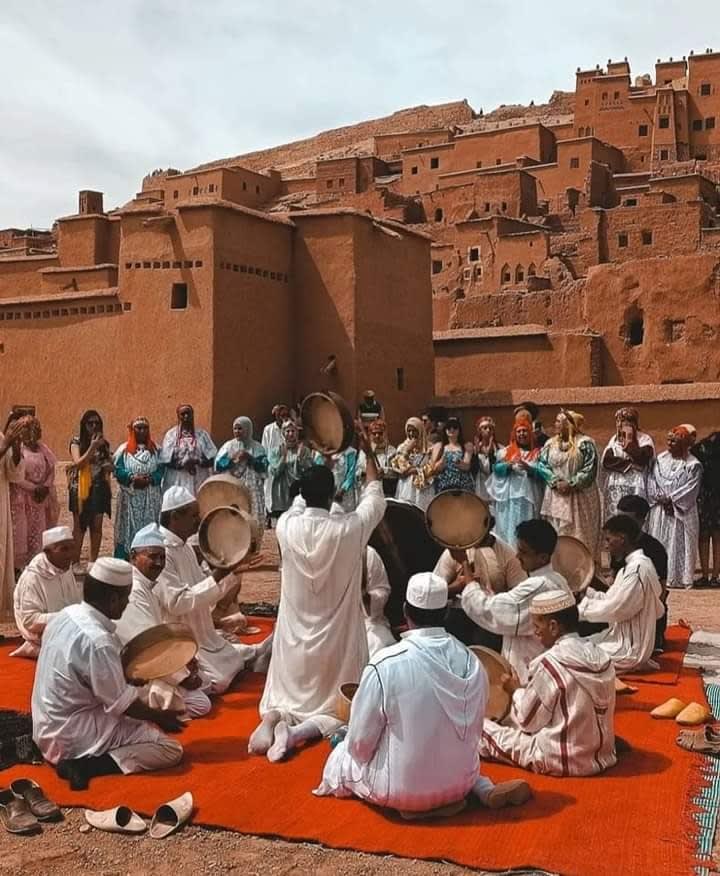
Since Yennayer became a public holiday, the celebration has moved out of the home: concerts of Amazigh music, exhibitions, parades in traditional dress and evenings of ahwach, the collective dances of the Atlas in which men and women answer each other in song to the beat of frame drums. Agadir and the Souss, where Tashelhit culture is very much alive, as well as Rabat and Marrakech, regularly host events around 13 and 14 January; programmes are announced a few days before by local councils and associations.
Experiencing Yennayer as a traveller
As a visitor, there are several ways to share the celebration:
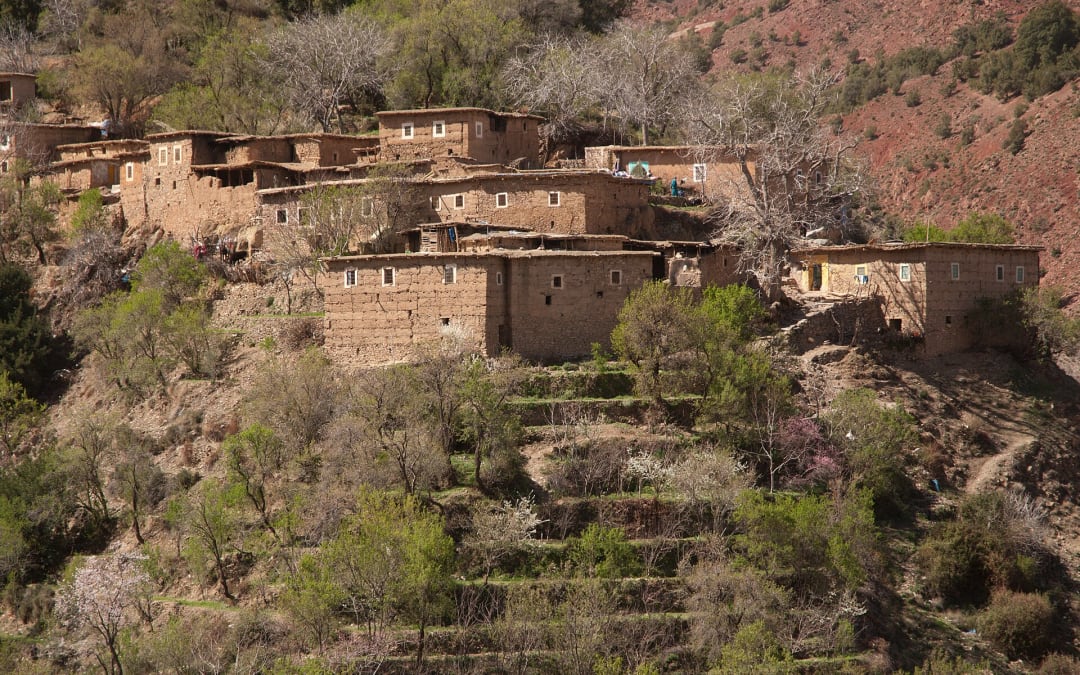
- In a High Atlas village. Guesthouses in the Ourika Valley, Imlil or Asni often prepare a festive dinner. Ask for it when you book. Our guide to visiting a Berber village near Marrakech explains how to do it respectfully.
- In Marrakech. Some riads and restaurants offer a special menu, and concerts take place in town. On 14 January, banks and government offices are closed, but the souks, monuments and restaurants stay open.
- In the Souss, around Agadir, where celebrations are often the liveliest.
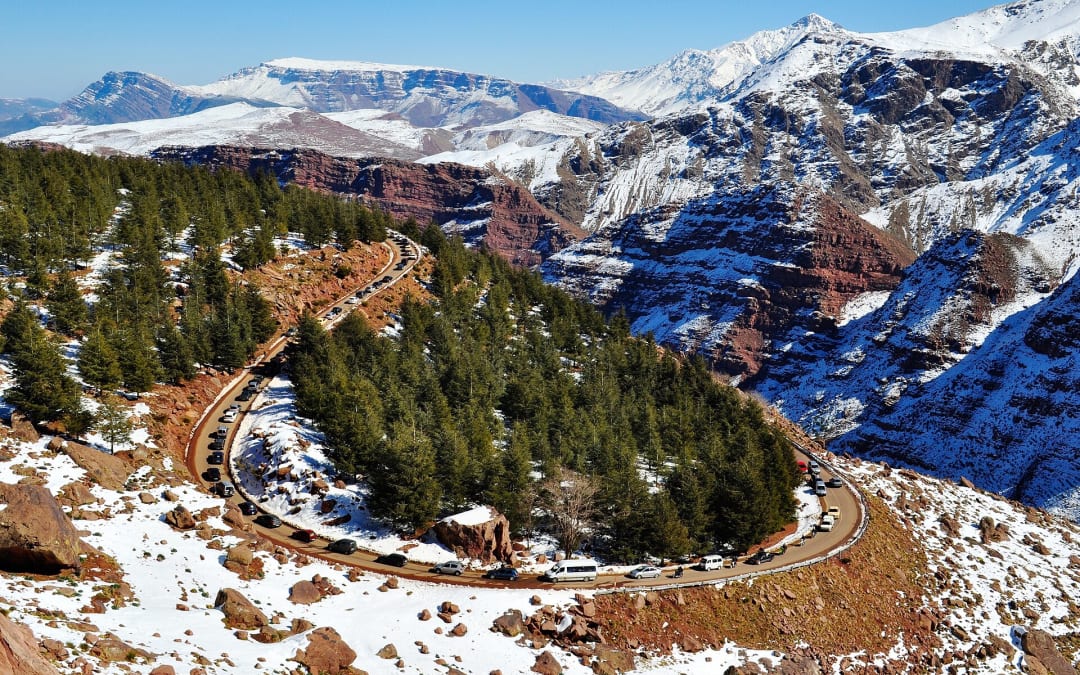
The ideal day? In the morning, head up to the Ourika Valley or Imlil to see the snowy peaks, have a tagine by the fire for lunch, and be back in Marrakech before dark. In January it is often sunny and mild during the day, but cold in the evening and in the mountains: read our tips for the Atlas Mountains in winter.
A few words to wish a happy new year
- Azul: hello (in Tashelhit and most Amazigh languages).
- Asggas amggaz: happy new year.
- Tanmmirt: thank you.
To go further, see our Darija and Tamazight phrasebook for travellers and our guide to Amazigh culture in the High Atlas.
In short
Yennayer is the Amazigh New Year, celebrated on 13 or 14 January and a public holiday in Morocco since 2024. In 2027 the year becomes 2977. Seven-vegetable couscous, a lucky stone, ahwach and concerts: a lovely opportunity to discover the Atlas in winter. Contact us to plan a day in the valleys around 14 January.