Skip to content
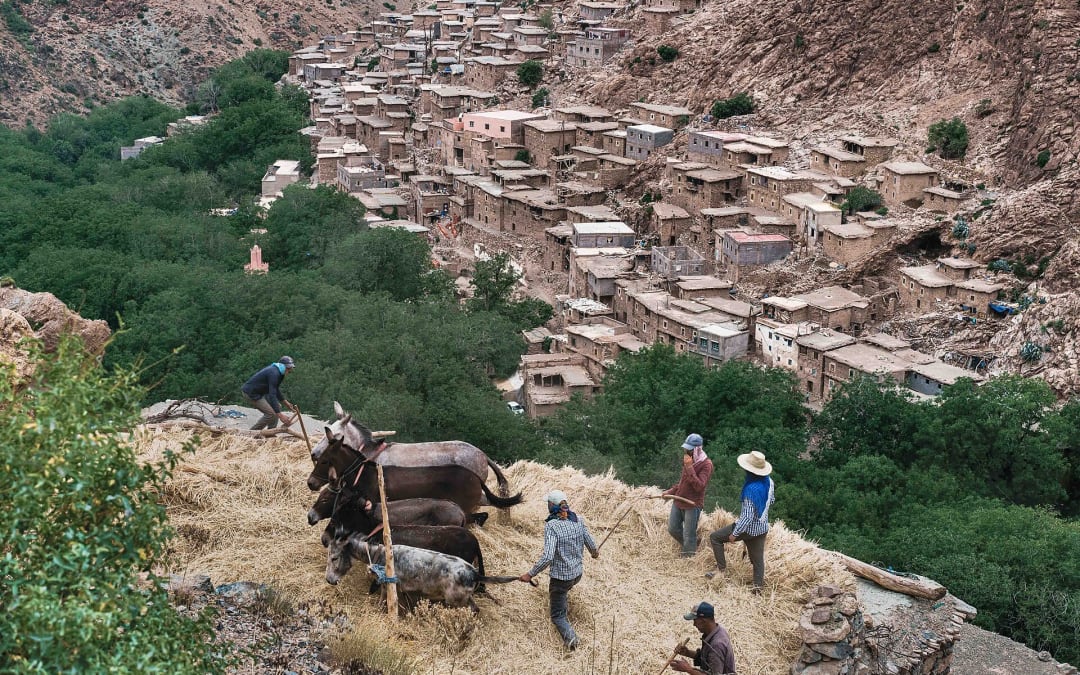
Traditional grain threshing with mules in a High Atlas village

Guides by theme

Amazigh culture & traditions

The Amazigh of the High Atlas, visiting a Berber village, weekly souks, Gnawa music, words of Darija and Tamazight: understanding Moroccan culture.

© Moroccan Sanchez — CC BY-SA 4.0, via Wikimedia Commons

Morocco is also, and above all in its mountains, an Amazigh country: an official language, an alphabet called Tifinagh, tribes attached to their valleys and very much living traditions, from the weekly souk to music handed down from master to pupil. This is the culture you meet on every trip into the Atlas, often without knowing it.

These guides give you the keys to what you see and hear: who the Amazigh are, what a visit to a Berber village is like, which souks to go to, where Gnawa music comes from, and a few words of Darija and Tamazight that will earn you a smile.

5 guides

Book

Book: Amazigh culture & traditions

Kasbah du Toubkal in Imlil with snowy peaks
Mountains

1h30 from Marrakech

Imlil & Toubkal

At the foot of North Africa’s highest peak

Frequently asked questions

Berber or Amazigh: what is the difference?

Both words refer to the same peoples. “Amazigh” (plural Imazighen) is the name they use for themselves; “Berber” is the outsiders’ term, still widely used.

Can you visit a Berber village from Marrakech?

Yes, in the Ourika Valley, Imlil or Asni, 1 to 1.5 hours’ drive away. A local guide makes meeting people easier, as well as being invited for tea in a family home.

What language is spoken in the Atlas?

Tashelhit, an Amazigh language, in the western High Atlas and the Souss; most people also speak Darija, Moroccan Arabic.