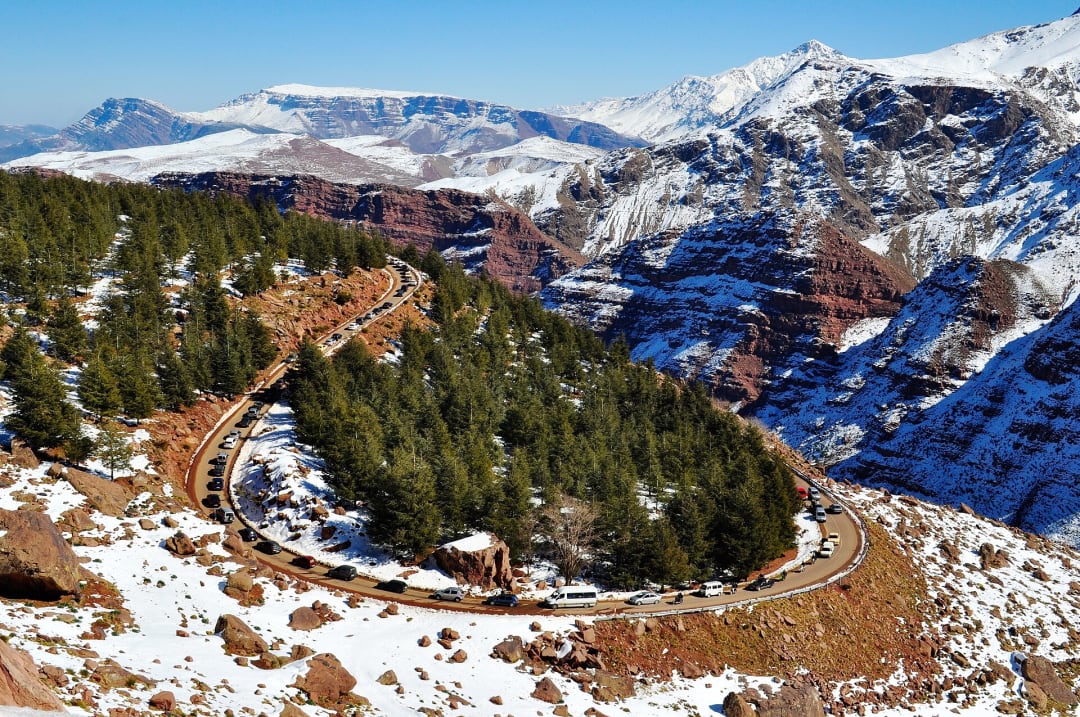
People often forget it: an hour’s drive from the palm trees of Marrakech, it snows. From December to March, the peaks of the High Atlas turn white, Oukaimeden opens its ski slopes, the villages of Imlil look like an alpine postcard, and you lunch on a tagine by the fire before heading back down to warm up in the hammam. Here is our guide to the Atlas in winter: where to see snow, which roads can close, what to do for your level, and what to wear to enjoy this magical season without any bad surprises.
When and where does it snow in the Atlas?
Snow falls mostly from December to March, above roughly 2,000 m, and can come lower during cold spells. Every winter is different: some years the peaks stay white for months, other years the snow melts within days. Useful benchmarks:
| Place | Altitude | From Marrakech | In winter |
|---|---|---|---|
| Ourika Valley (Setti Fatma) | about 1,500 m | 1 h 15 | Snow on the peaks, lively waterfalls after rain |
| Ouirgane | about 1,000 m | 1 h 15 | Quiet, pine forests, rarely snowy |
| Imlil | about 1,750 m | 1.5 h | Villages sometimes under snow, icy trails |
| Oukaimeden | about 2,600 m | 1.5 h | Ski resort when there is enough snow |
| Tizi n’Tichka pass | about 2,260 m | 2 h | Temporary closures possible after heavy falls |
| Toubkal | 4,167 m | Imlil + 2 days’ walk | Technical winter ascent |
Meanwhile, Marrakech enjoys mild, sunny days around 18 to 20 °C, but cool nights close to 5 °C. In the mountains, nights drop well below freezing.
What to do in the Atlas in winter
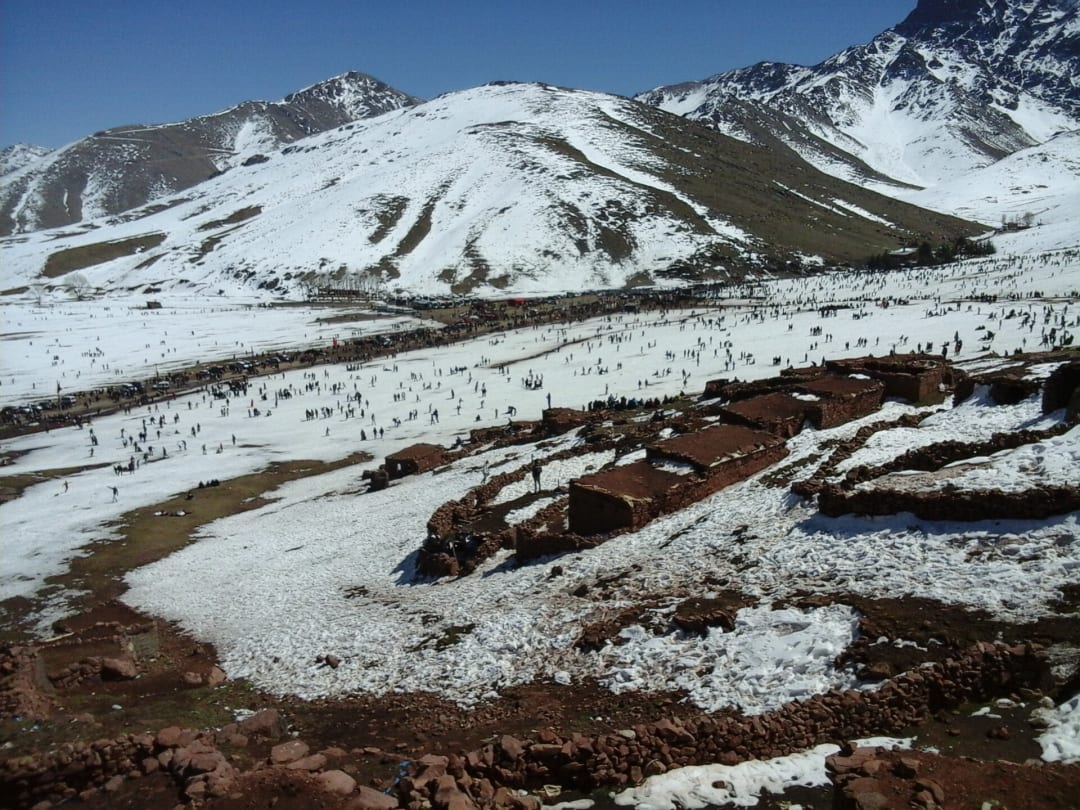
Play in the snow at Oukaimeden
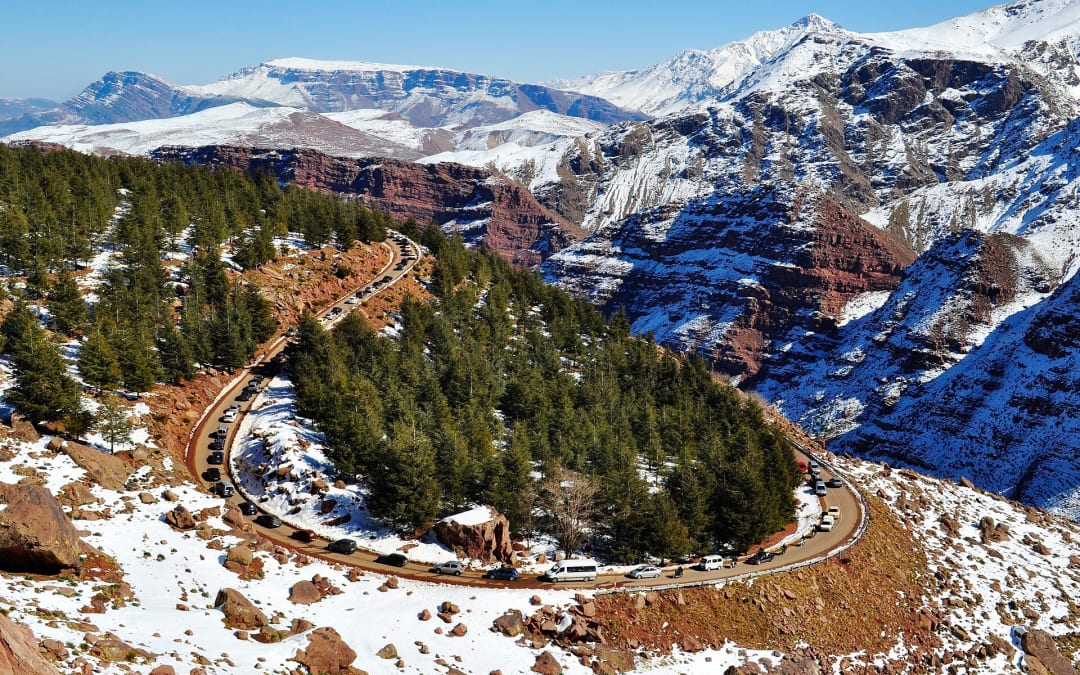
The Oukaimeden plateau, at about 2,600 m, is one of the highest ski resorts in Africa, with lifts climbing above 3,000 m. When the snow is there, skis, sledges and clothing can be hired on site, often in a very family-friendly atmosphere; muleteers offer to carry equipment up to the slopes. The plateau is also home to prehistoric rock carvings, visible when there is no snow. Our guide to Oukaimeden from Marrakech details the day.
Walk through the villages of Imlil
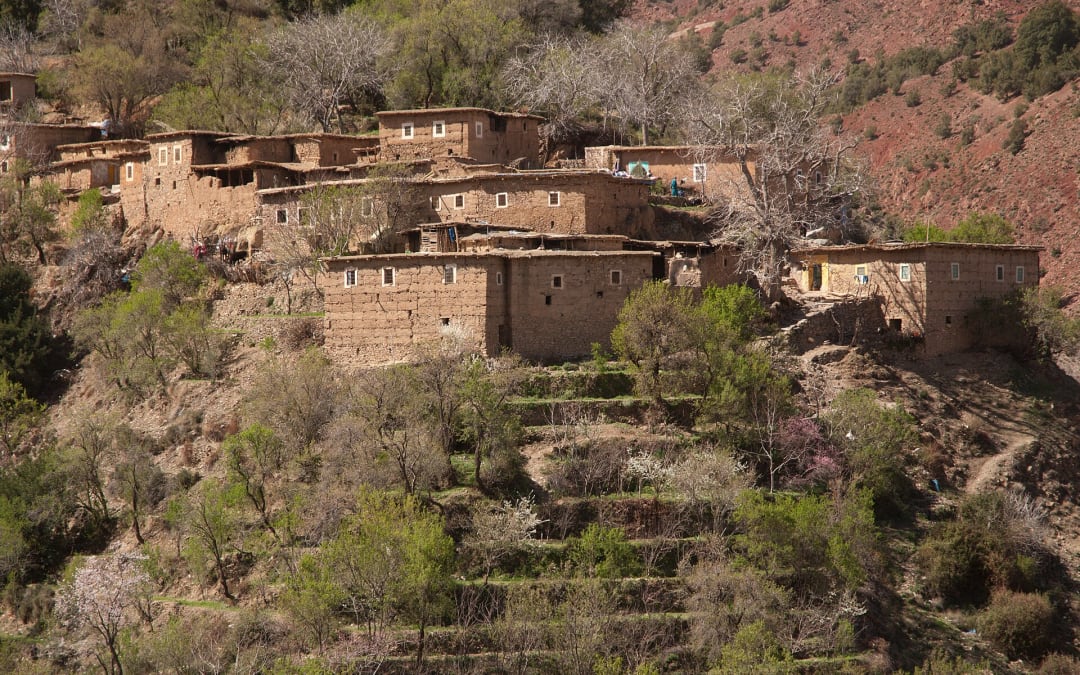
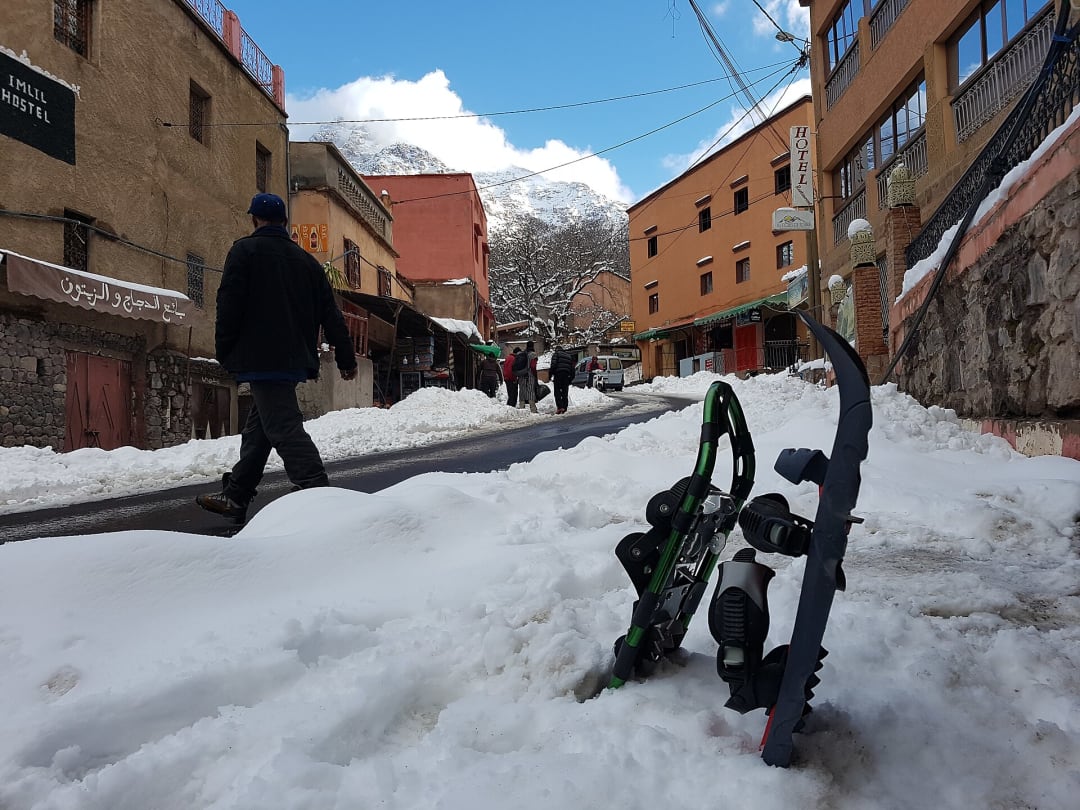
Imlil and the hamlet of Aroumd under snow, with their tiered stone-and-earth houses facing the Toubkal massif, are among the most beautiful images of the Moroccan winter. With a local guide, two to four-hour walks remain accessible to most well-equipped walkers; trails can be icy in the morning. See our Imlil hike guide and our Imlil day trip.
Climb Toubkal in winter, for mountaineers
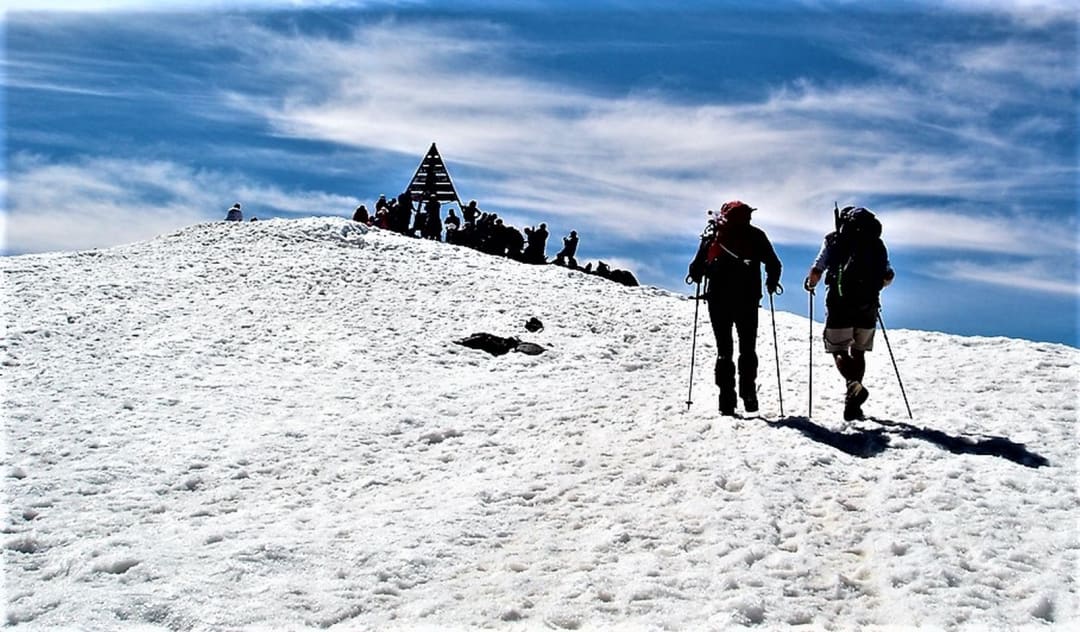
Climbing Toubkal in winter has nothing in common with the summer ascent: snow and ice call for crampons, an ice axe, high-mountain experience and good fitness. A licensed mountain guide is compulsory all year round. It is all explained in climbing Toubkal in 2 days.
A gentle day in Ourika or Ouirgane
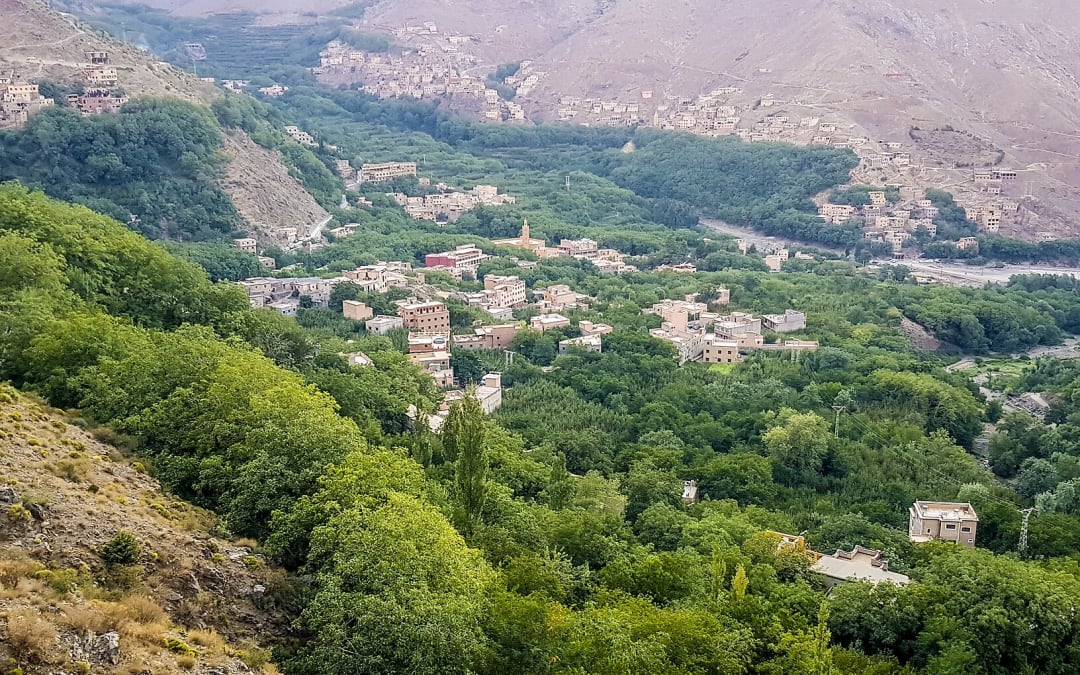
For families and travellers who simply want to see the snow from a distance: drive up the Ourika Valley, walk to the first waterfalls of Setti Fatma, lunch by the river next to a stove, and head back in the late afternoon. In Ouirgane, the pine forests and the lake offer a calm day away from the crowds. Our ideas: things to do in the Ourika Valley.
A sunset over the snowy Atlas
In winter, the Agafay desert, 40 minutes from Marrakech, offers an amazing sight: golden stony hills in the foreground and the snow-covered Atlas range on the horizon. Bring a warm jacket for dinner under canvas: see the Agafay desert dinner.
And at the end of winter, from late January into February, almond blossom turns the valleys white in its turn: another show.
Winter roads: what you need to know
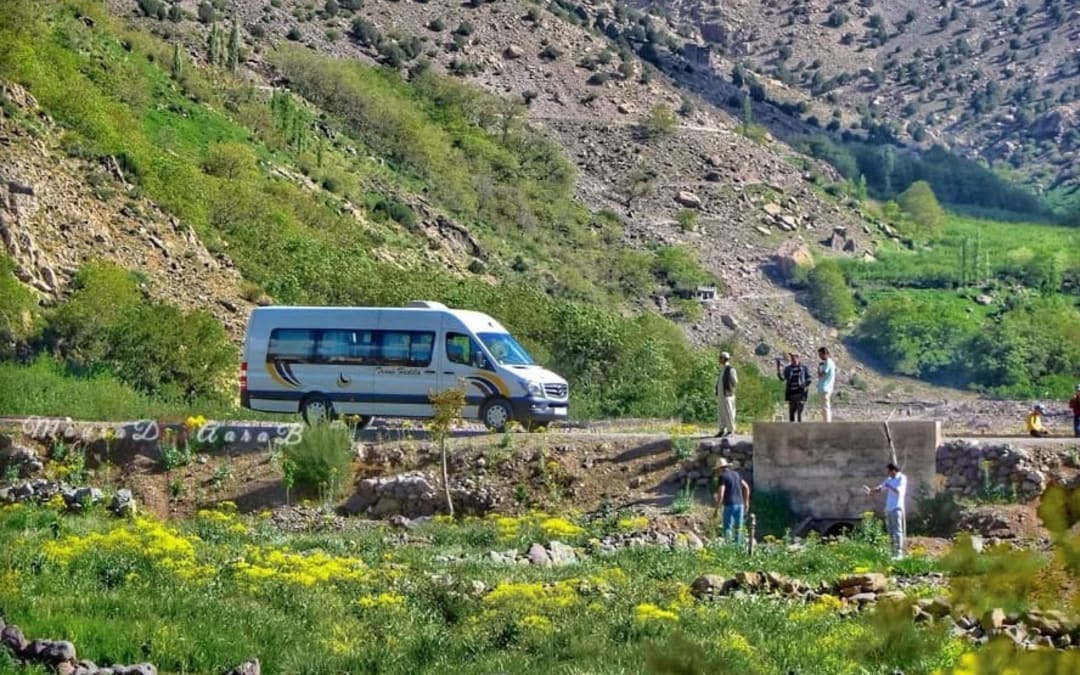
- The Tizi n’Tichka pass, on the road to Ouarzazate and the desert, can close for a few hours or days after heavy snowfall. Snowploughs work fast, but build some slack into your tour.
- The Oukaimeden road may be restricted to suitable vehicles, or temporarily closed, after a big storm.
- Imlil and Ourika stay accessible for most of the winter; only a few perched villages can be cut off.
- Leave early and be back before dark: black ice forms late in the day.
With a private driver used to these roads, you do not have to worry: he checks road conditions before leaving and adapts the route if needed. See our Marrakech – Ourika / Imlil transfer.
What should you wear?
- Layers: technical t-shirt, fleece, down or warm jacket.
- Hat, gloves and warm socks, even for a simple day in the valleys.
- Waterproof hiking boots with a good sole; trainers are fine for Ourika in dry weather.
- Sunglasses and sunscreen: at altitude, the glare off the snow is strong.
- To sleep in the mountains, choose a guesthouse with heating or a fireplace and ask for extra blankets.
Travelling in the Atlas, an act of solidarity
The September 2023 earthquake hit several valleys of Al Haouz province, south of Marrakech, hard. Rebuilding is progressing, and the residents say it themselves: the best help is to keep coming, to sleep in their guesthouses, eat in their cafés and walk with their guides.
In short
From December to March, the High Atlas offers snow an hour from Marrakech: skiing and sledging at Oukaimeden, white villages in Imlil, the Ourika waterfalls, sunsets over the peaks from Agafay. Dress warmly, leave early and leave the road to a driver who knows it. To plan your day, contact us, or read which Atlas valley to choose.