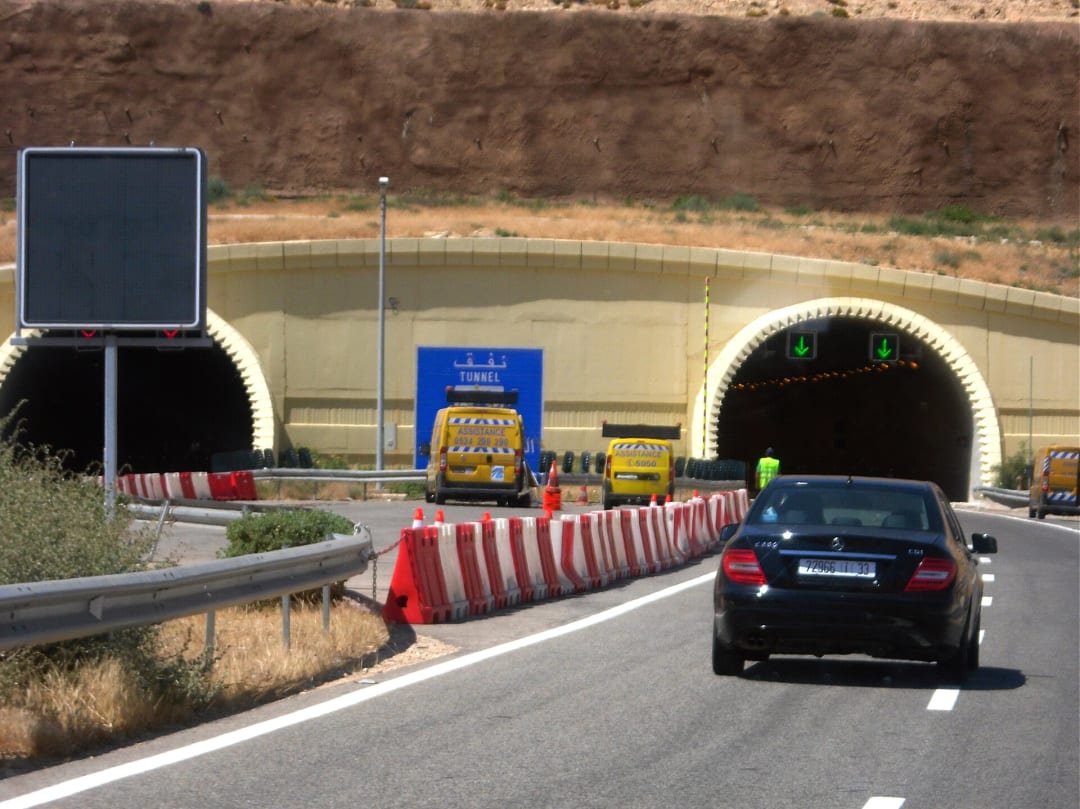
Hiring a car and setting off on Morocco’s roads is many travellers’ dream, and it is entirely possible: the motorways are good, the scenery superb and service stations plentiful on the main routes. But Moroccan driving has its own codes, which surprise most European drivers: frequent police checks, mobile speed cameras at village entrances, roundabouts where priority is not always what you expect, carts without lights at night. We spend our days on these roads; here is what you need to know before you take the wheel.
The papers to keep in the car
At a check you will almost always be asked for the same documents. Keep them together, in the glovebox or on you:
- Your driving licence. A European licence is generally accepted for a tourist stay, but many hire companies and insurers recommend an international driving permit, and it becomes essential if your licence is not written in Latin script.
- Your passport.
- The vehicle registration document and insurance certificate, provided by the hire company.
- The rental agreement, which proves you are allowed to drive the car.
Speed limits
| Type of road | Usual maximum speed |
|---|---|
| Motorway | 120 km/h |
| Roads outside built-up areas | 100 km/h, often 80 km/h on mountain roads |
| Built-up areas | 60 km/h, and sometimes 40 km/h |
| Near schools, villages and checkpoints | Signs at 40 km/h or less |
These limits apply unless signs say otherwise, and the signs change often: approaching a village, the limit can drop from 100 to 60 and then to 40 km/h within a few hundred metres. That is exactly where most checks are.
Speed cameras and police checks
This is what surprises visitors most. Checks are frequent, especially on national roads:
- Checkpoints run by the police or gendarmerie sit at the entrance and exit of towns, marked by a stop sign and spike strips on the road. Come to a complete stop at the stop sign, even if the officer waves you on, then move off slowly.
- Mobile speed cameras, hand-held or on a tripod, are very common just after the speed limit signs at village entrances. They are often placed a few hundred metres further on, where you think you have already slowed down enough.
- Fixed speed cameras also exist, on motorways and major roads.
- Fines are generally paid on the spot. Always ask for an official receipt.
The rules that surprise people
- Priority at roundabouts: at many roundabouts, priority is still given to the right, meaning to vehicles entering. Others have signs that reverse it. Slow down and look before you pull out.
- Seat belts are compulsory in the front and in the back.
- Phones are banned at the wheel, even to look at the GPS while holding it.
- Alcohol: the legal limit is very low. If you drink, do not drive.
- Solid lines are taken seriously by the police, even when local drivers cross them.
Driving in practice
In town, especially in Marrakech, traffic is dense and unpredictable: scooters weaving in from every side, pedestrians, horse carriages, handcarts and bicycles. The medina is closed to cars, and you will not need one there anyway.
On national roads, you often overtake slow lorries, shared taxis that stop without warning and farm vehicles. Village crossings call for slowing right down.
In the mountains, on the Tizi n’Tichka or the Tizi n’Test, the bends go on for dozens of kilometres, with lorries and roadworks. Allow twice as long as the distance suggests. Our table of southern Morocco driving distances and travel times gives realistic durations.
At night, avoid driving outside towns and motorways: unlit carts and bicycles, pedestrians on the verge, animals and potholes make driving very risky.
Parking, fuel and tolls
- Parking is often watched by an attendant in a vest, who expects a few dirhams when you leave. It is the custom, and your car really is watched.
- Fuel is easy to find on the main routes. In the south, fill up as soon as the gauge drops to half: stations can be far apart.
- Motorway tolls are paid in cash or by card at the barriers. Keep dirhams in small notes.
In case of an accident or breakdown
In an accident, do not move the vehicle if anyone is injured, and call the emergency services: 19 for the police in town, 177 for the gendarmerie on the open road, 15 for the fire brigade and medical help. For a minor collision with no injuries, fill in an accident report form with the other driver and inform your hire company straight away, using the assistance number on the contract.
Drive yourself or take a driver?
Driving in Morocco is doable, and some travellers love the freedom it brings. But you have to accept constant vigilance, checks and fatigue, often on a holiday when you would rather look at the scenery than the road. Many of our clients choose a mix: no car in Marrakech, a driver for the long mountain and desert journeys, and perhaps a hire car on the coast, where driving is simpler. Our comparison hire a car or take a driver sets out the real costs of both options.
| Hire car | Private driver | |
|---|---|---|
| Checks and speed cameras | Up to you | Handled by the driver |
| Mountain roads and night driving | Tiring and risky | No worries |
| Parking in town | You have to find it | Dropped at the door |
| Freedom of timing | Total | Wide, within the agreed plan |
| Cost for a group | Hire, fuel, tolls, insurance | Fixed price per vehicle |
Book a driver
For sightseeing days, hiring a private driver in Marrakech by the day leaves you the programme and leaves us the road. For journeys between cities, our private transfers come at a fixed price per vehicle, such as the Marrakech to Essaouira transfer, the Marrakech to Agadir transfer or the Marrakech to Merzouga transfer for the long desert road. Our article on private transfer prices explains how these rates are worked out.