
In Marrakech, you also travel with your taste buds. From tanjia slow-cooked overnight in the embers of a hammam to mechoui carved by weight from mid-morning, tagines fragrant with preserved lemon and the smoking stalls of Jemaa el-Fna, the city is an open table. Here are the 15 dishes and treats you must try, what is in them, where to find them and how much to pay, with tips from our drivers, who know the good neighbourhood spots better than anyone.
Marrakech’s signature dishes
1. Tanjia marrakchia
This is THE Marrakech dish. Beef or lamb is placed in a tall clay jar with preserved lemon, garlic, cumin, saffron and smen, an aged clarified butter. The jar, sealed with paper, is handed to the *fernatchi*, the man who tends the fire of a hammam: it cooks slowly, for six to eight hours, in the hot embers. It is sometimes called the bachelor’s dish, because craftsmen used to prepare it in the morning and collect it, meltingly tender, in the evening.

2. Mechoui
A whole lamb slow-roasted in an oven dug into the ground, served by weight with cumin and salt. Near Jemaa el-Fna, a whole lane, which everyone calls Mechoui Alley, serves it from late morning: you choose the amount, sit on a bench and eat it with bread.
3. Tagine
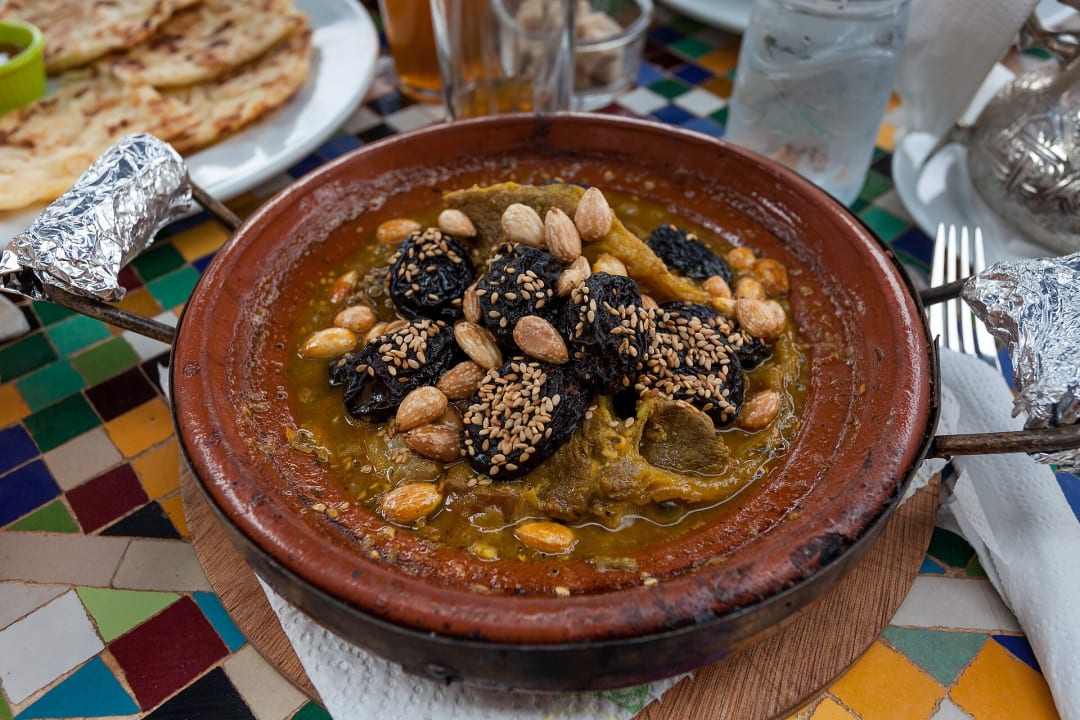
Tagine refers both to the clay dish with a conical lid and to what simmers inside it. Try chicken with preserved lemon and olives, lamb with prunes and almonds, kefta with eggs, or seasonal vegetables. In local restaurants, expect 60 to 100 dirhams.
4. Friday couscous
In Morocco, couscous is traditionally eaten at Friday lunch, with family, after prayers. Many small restaurants only serve it that day: it is the time to try seven-vegetable couscous or couscous *tfaya*, with caramelised onions and raisins.
5. Pastilla
A crisp, sweet-and-savoury pie traditionally filled with pigeon or chicken, almonds, eggs and spices, dusted with icing sugar and cinnamon. There is also a seafood version without sugar. It is a festive dish, more often found in restaurants than in the street.
Soups and breakfasts
6. Harira
A soup of tomatoes, lentils, chickpeas and herbs, thickened with flour: the soup that breaks the fast during Ramadan, but available all year, often with dates and *chebakia*.
7. B’ssara
A purée of dried fava beans with olive oil, cumin and chilli: the workers’ breakfast, served in small local cafés for a few dirhams.
8. Msemen, baghrir and harcha
Moroccan pancakes: square, flaky *msemen*, *baghrir*, the thousand-hole pancake, and *harcha*, a semolina flatbread. With honey, butter or fresh cheese and a glass of tea: the best breakfast in the medina.
9. Sfenj
Ring-shaped doughnuts fried in front of you in the morning, eaten hot, plain or sugared.
Jemaa el-Fna street food
10. Snail soup
In the evening, vendors serve bowls of snails in a broth flavoured with around fifteen herbs and spices. Locals drink the broth to warm up and aid digestion. An experience to try at least once.
11. Skewers, kefta and merguez
Grilled over charcoal at the numbered stalls on the square, with bread, olives and a spicy tomato sauce. Always ask for prices before ordering: our guide to Jemaa el-Fna square explains how to find your way around.
12. Cooked salads
*Zaalouk*, an aubergine dip with tomato and garlic, and *taktouka*, grilled peppers and tomatoes: served as starters with bread, they come with every meal.
Sweets and drinks
13. Amlou
A spread of roasted almonds, argan oil and honey from the Souss region: perfect on bread or a pancake. You will find it in the argan cooperatives on the road to Essaouira, as we explain in goats in argan trees.
14. Pastries
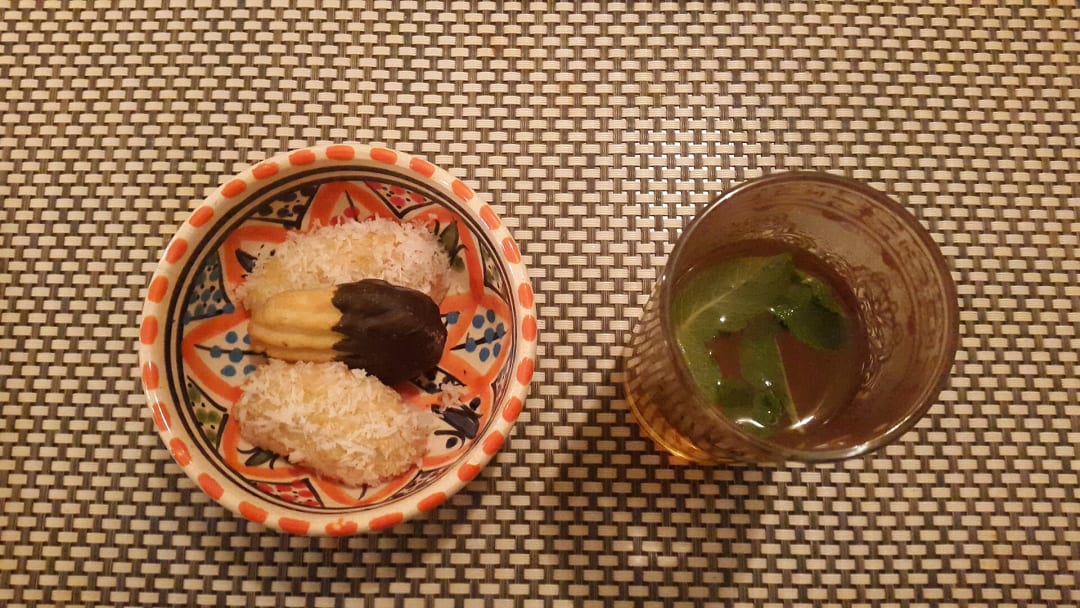
*Gazelle horns* filled with almond paste, *chebakia* with sesame and honey, *ghriba* with almonds or coconut: buy them by weight in the medina’s pastry shops.
15. Mint tea and orange juice
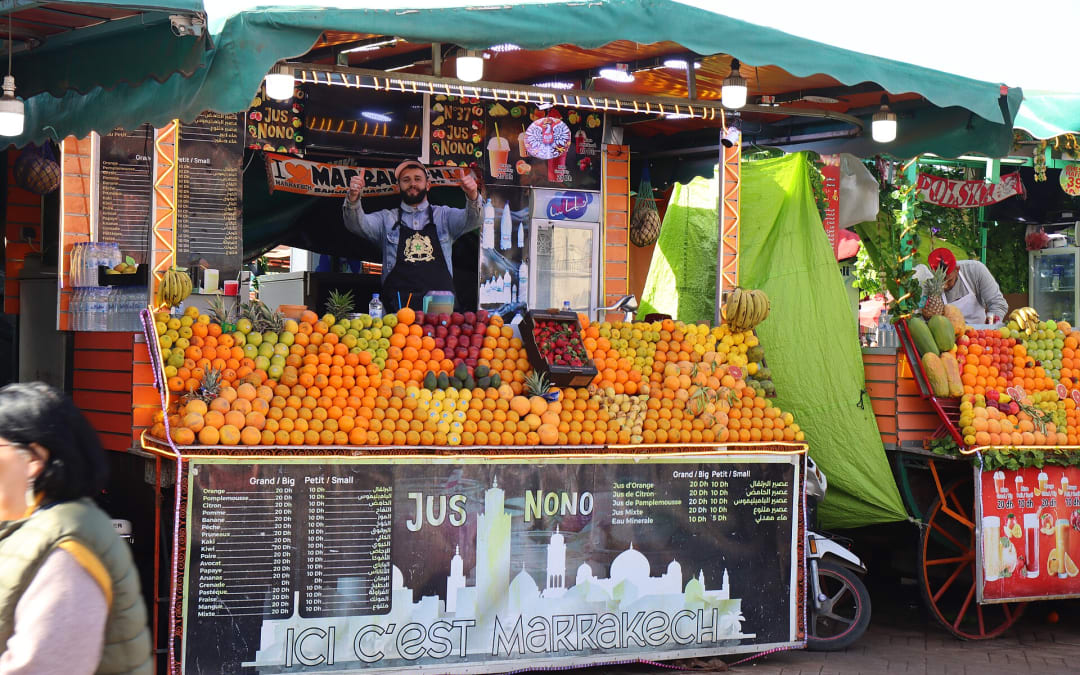
Green tea with mint, served very sweet and poured from a height to aerate it, is the ultimate gesture of hospitality. On Jemaa el-Fna, fresh orange juice sellers line up their carts from morning to night.
Where to eat in Marrakech
- The Jemaa el-Fna food stalls, from late afternoon until late at night: a unique atmosphere, with prices posted at most stalls.
- Mechoui Alley and the small eateries around the souk, at lunchtime.
- Neighbourhood restaurants in the medina and the Mellah, for a tagine or Friday couscous.
- Gueliz restaurants, for more modern Moroccan cooking.
- Roof terraces of riads and restaurants for dinner with a view of the Koutoubia.
For budgets, see our guide to prices in Marrakech.
Our tips for eating well, worry-free
- Pick busy stalls: high turnover means fresh food.
- Drink bottled water and avoid ice in small stalls.
- Wash your hands before eating with bread, as Moroccans do.
- During Ramadan, many small restaurants close during the day: enjoy the evening meals instead, see travelling in Morocco during Ramadan.
- In the countryside, the best tagine is often the one at a riverside café in the Ourika Valley.
In short
Tanjia, mechoui, tagine, Friday couscous, pastilla, harira, b’ssara, msemen, sfenj, snails, skewers, cooked salads, amlou, pastries and mint tea: fifteen reasons to sit down at the table. To discover the city and its flavours with a guide, book our Marrakech guided city tour, or contact us to plan your stay.