You will hear it before you see it: a regular, hypnotic metallic clatter, the sound of the qraqeb, and beneath it the round, deep bass of a guembri. On Jemaa el-Fna square, in an Essaouira alley or in a village near Merzouga, Gnawa music is part of Morocco’s soundtrack. But behind the colourful costumes and whirling dances lies a very old spiritual tradition, listed as intangible heritage of humanity. Where do the Gnawa come from? What is a lila? Where can you hear them, and how do you do it respectfully? Here are the keys to understanding what you are about to hear.
Who are the Gnawa?
The Gnawa are both a community and a brotherhood. Their ancestors came from sub-Saharan Africa, from the old “Sudan” of the Arab geographers, regions that correspond today to Mali, Niger, Senegal or Guinea. Many were brought to Morocco by the trans-Saharan trade, often as slaves, others as soldiers. Over the centuries, they blended the possession rites and rhythms of their homeland with Moroccan Sufi Islam.
Their patron saint is Sidi Bilal, companion of the Prophet and the first muezzin of Islam, of Ethiopian origin: a symbol for a community that made music a path to healing and spirituality. In 2019, UNESCO inscribed Gnawa culture on the Representative List of the Intangible Cultural Heritage of Humanity.
The instruments: guembri, qraqeb and tbel
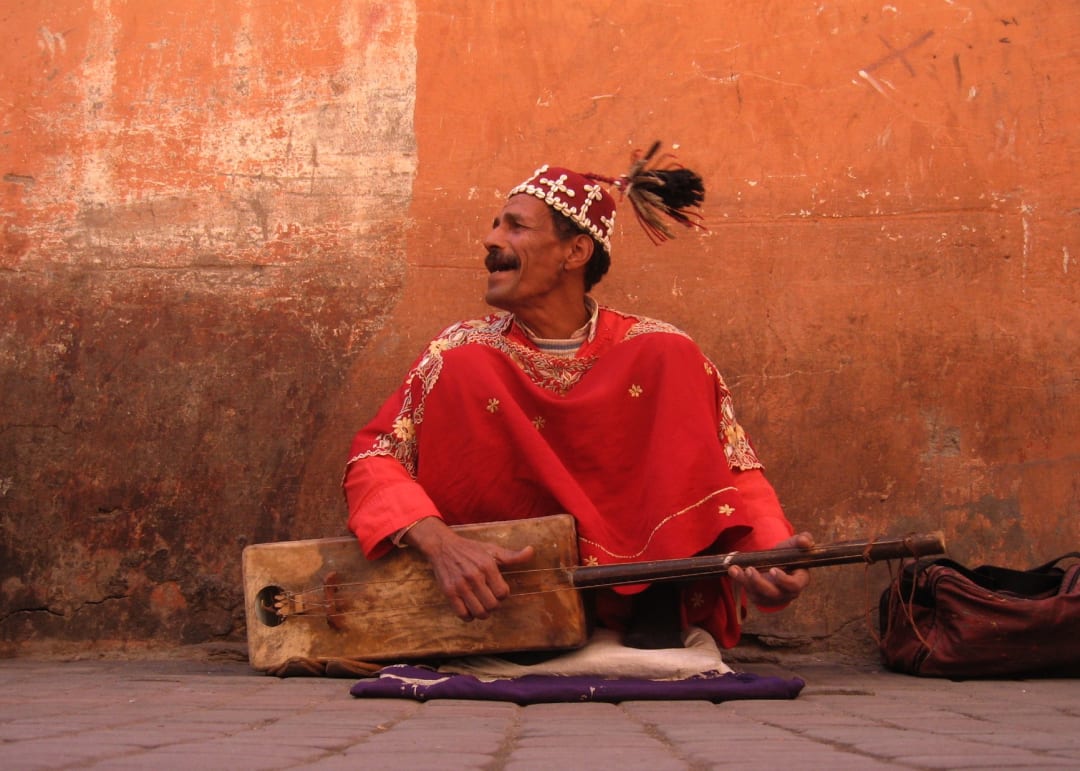
- The guembri (or *sintir*, *hajhouj*): a three-stringed bass lute with gut strings, whose body, carved from a log, is covered with skin. It is the instrument of the *maalem*, the master, who leads the music and singing.
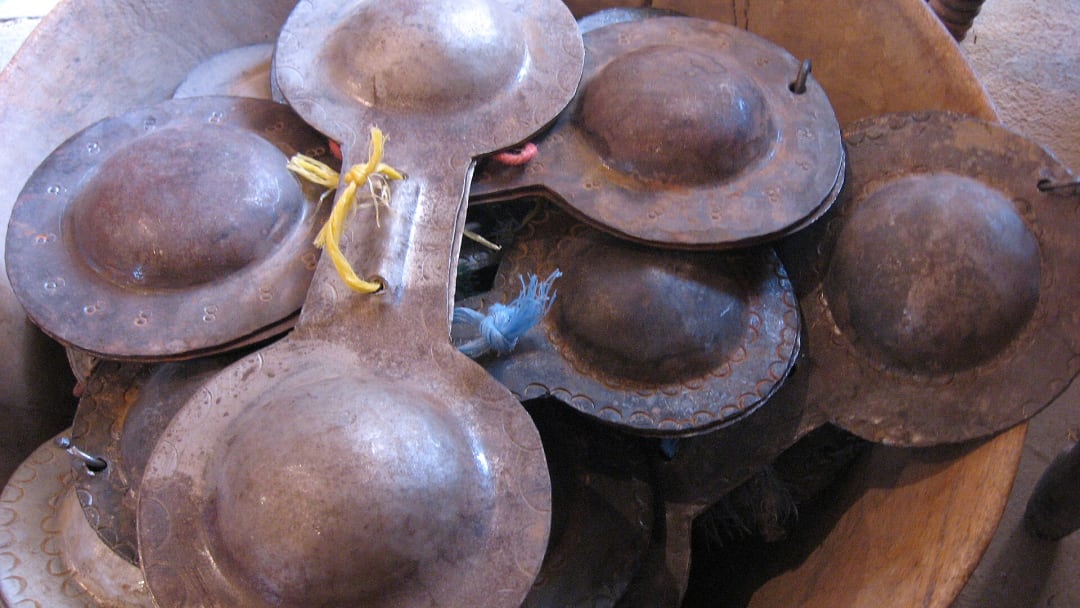
- The qraqeb: large iron castanets played in pairs, producing that bewitching triple rhythm you recognise anywhere. They are said to evoke the sound of chains.
- The tbel: a large drum struck with sticks, used mainly in processions.
The lila: a night of music and trance
The heart of the Gnawa tradition is not the concert but the *lila*, literally “the night”. Held in a private home or a zaouia, it often lasts from sunset to dawn. It is a ceremony of healing and protection: through music, it calls on spiritual entities known as *mlouk*, each linked to a colour, an incense and a rhythm.
It follows precise stages:
- The procession, to the sound of the tbel and qraqeb, sometimes with a ritual sacrifice and a shared meal.
- The opening songs, which tell the story and the exile of the ancestors.
- The sequence of colours: white, blue, red, black, green, yellow… The maalem moves from piece to piece, and participants go into trance, covered with a veil of the matching colour.
- Dawn, which closes the ceremony in calm.
A female figure plays a central role: the *moqaddema*, who organises the lila and guides the participants. Lilas are private ceremonies: you attend by invitation, and you do not film people in trance.
From ritual to stage: the Essaouira festival
Since 1998, the Gnaoua and World Music Festival in Essaouira, usually in June, has made this music known worldwide. On its free stages, great maalems play with jazz, blues, African and electronic musicians: these “fusions” have become its trademark. Masters such as the late Mahmoud Guinia, from Essaouira, took the guembri to international stages. For dates, see our festival calendar 2026–2027.
Where to hear Gnawa music
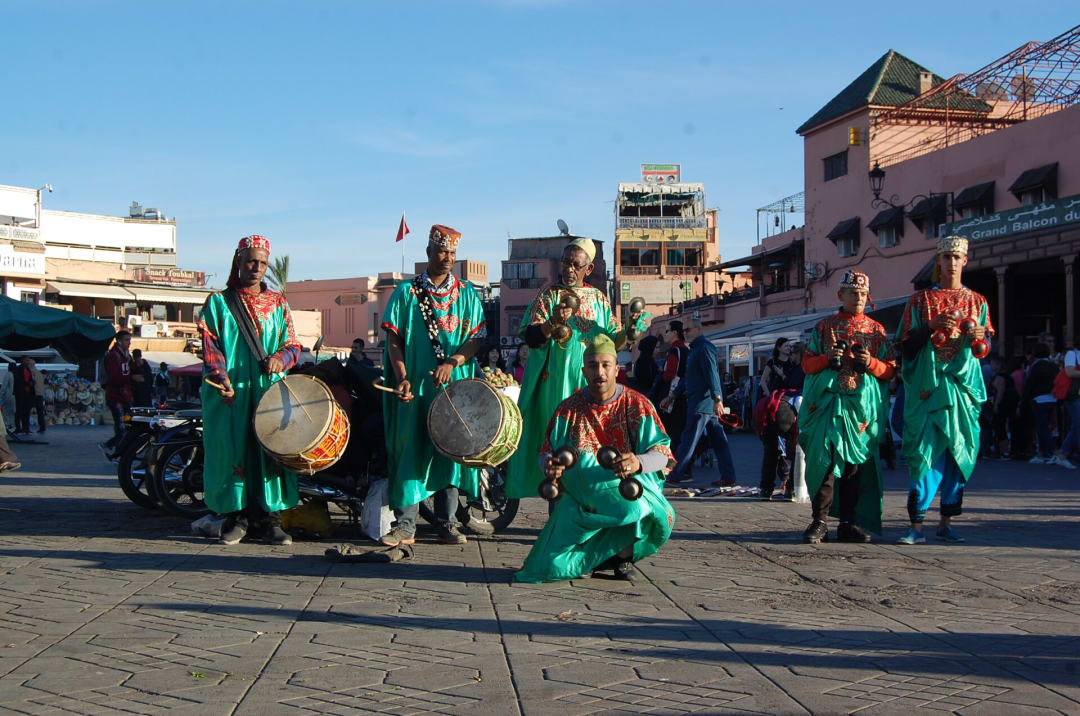
- On Jemaa el-Fna square, Marrakech: groups in costume, with tasselled caps and cowrie shells, play and dance all day long. If you take photos, a coin is expected. See our guide to Jemaa el-Fna square.
- In Essaouira, the capital of Gnawa music: the zaouia of Sidna Bilal, in the medina, is the brotherhood’s spiritual home; concerts take place in cafés and riads all year. See our Essaouira day trip from Marrakech.
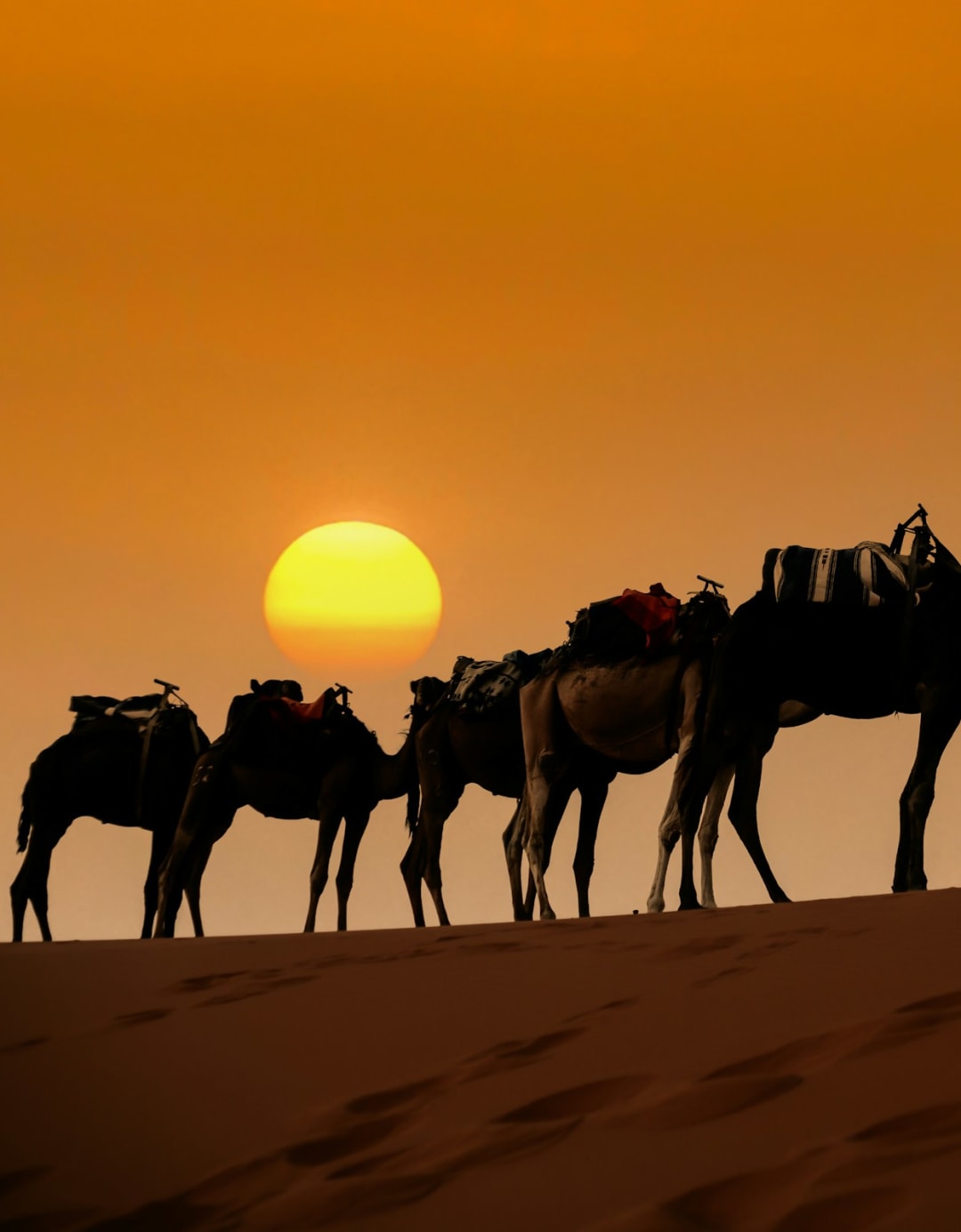
- Near Merzouga, the village of Khamlia, home to descendants of families from the Saharan south, welcomes visitors into houses of Gnawa music: an amazing stop on a Merzouga desert tour. See also things to do in Merzouga.
- In some riads and restaurants in Marrakech, which invite groups in the evening.
Listening respectfully: our tips
- Think of Gnawa music as living heritage, not just a street show.
- Ask before taking photos or filming, and leave a coin for the musicians on the square.
- If you are invited to a lila, stay discreet, do not film people in trance, and follow the moqaddema’s guidance.
- Buy a CD or a handmade guembri rather than a soulless souvenir: you support the musicians directly.
In short
Inherited from ancestors who came from sub-Saharan Africa and blended with Moroccan Sufism, Gnawa music is a music of healing before it is a stage music. Guembri, qraqeb, lila and mlouk will hold no more secrets for you. Hear it on Jemaa el-Fna, in Essaouira in June or in Khamlia near Merzouga, and for your journeys between them, contact us. To go further, read our guide to Amazigh culture in the High Atlas.