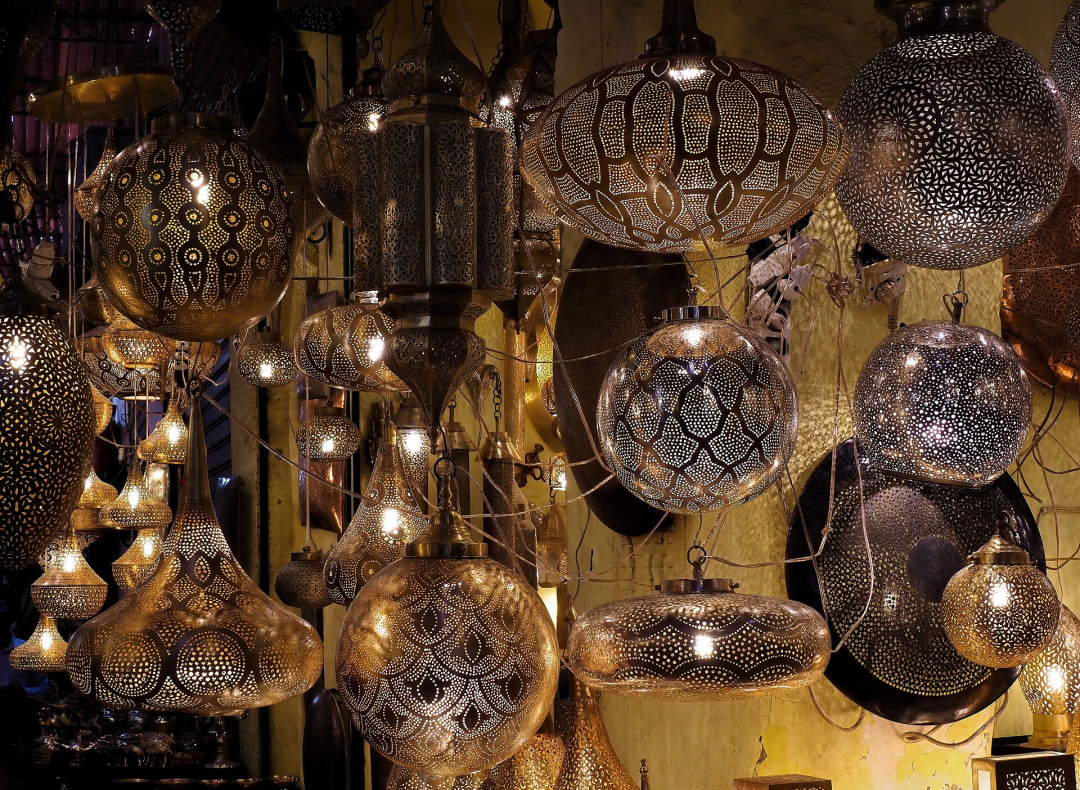
Chiselled metal lanterns casting stars on the walls, pyramids of spices, slippers in every colour, Berber rugs stacked to the ceiling: the souks of Marrakech are a maze several kilometres long in which every lane has its speciality. They are one of the great pleasures of a trip to Morocco, as long as you know where to go, what to buy and how to bargain without getting caught out. Here is our guide to the Marrakech souks: the areas to know, the best souvenirs to bring home, the art of haggling and our tips for leaving with beautiful purchases at a fair price.
How are the Marrakech souks organised?
The souks begin just north of Jemaa el-Fna square and stretch as far as the Ben Youssef madrasa. Each souk traditionally gathered one trade, and that organisation still largely survives:
| Souk | Speciality | Good to know |
|---|---|---|
| Souk Semmarine | Main artery, textiles, souvenirs | The natural entrance from Jemaa el-Fna |
| Rahba Kedima | Spices, baskets, plants | A small lively square with terraces above |
| Souk Haddadine | Ironworkers, lanterns | You can watch the craftsmen at work |
| Dyers’ souk | Dyed wool, colourful skeins | One of the most photogenic corners |
| Souk Cherratine | Leather goods, bags, belts | Leather quality varies, so touch it |
| Criée berbère | Rugs | The former rug auction market |
The lanes look alike and maps are often approximate: getting lost is part of the fun, but a first visit with a guide helps you understand how the souks work. See our article on the medina guided tour.
What should you buy in the Marrakech souks?
- Babouches: soft leather slippers, embroidered or plain, light to bring home. Check the stitching and the sole.
- Lanterns in chiselled metal or coloured glass, from small candle holders to large chandeliers.
- Berber rugs: flat-woven kilims, Beni Ouarain rugs in undyed wool, antique pieces. It is the most important purchase: take your time.
- Ceramics: decorative tagines, painted dishes, bowls. Glazed tagines meant for cooking should be chosen with care.
- Spices: ras el hanout, cumin, paprika, bought by weight and well sealed for the journey.
- Argan oil: for pure oil, choose a women’s cooperative on the road to Essaouira or a reputable shop rather than a street stall.
- Black soap and ghassoul clay, to recreate the hammam ritual at home.
- Teapots and tea glasses, symbols of Moroccan hospitality.
How do you bargain in the souks?
In the souks prices are not displayed: haggling is part of buying and can be very enjoyable once you know the rules.
- Get a feel for prices by looking in several shops before buying.
- Let the seller name his price, then offer considerably less, without being insulting.
- Stay cheerful and patient: a glass of tea offered commits you to nothing.
- Set yourself a maximum price and stick to it.
- Do not name a price if you do not want to buy: it is seen as a commitment.
- Know when to walk away: that is often when the seller makes his best offer.
To learn reference prices without pressure, the Ensemble Artisanal on Avenue Mohammed V has fixed prices: a visit before the souks gives you useful benchmarks.
When should you go to the souks?
Shops generally open mid-morning and close in the evening. In the morning the lanes are calmer and the sellers more available; in the late afternoon the bustle is at its peak. On Fridays, around the midday prayer, some shops close for a few hours. In summer, favour the morning: the covered lanes stay cool, but the heat rises fast.
Traps to avoid
- Fake guides who lead you to shops where they earn a commission.
- The tannery that is “special, today only”: the visit always ends in a leather shop.
- Big purchases under pressure: for a rug, come back the next day if you are unsure.
- Shipping: for a rug or a bulky item, ask for a detailed receipt and proof of dispatch.
Our article is Morocco safe? gives more practical advice, and our guide to tipping in Morocco helps you know what to give porters and guides.
Carrying your purchases
A rug, three lanterns and a stack of ceramics are not easy to carry back to the riad. With a driver at your disposal, your shopping stays in the vehicle for the rest of the day, and on departure day the boot of a Mercedes Vito takes suitcases and bulky souvenirs alike. Remember your airline’s luggage rules too: our article on direct flights to Marrakech from Europe explains how to avoid surprises at the check-in desk.
The souks in your stay
The souks are best visited on the same day as Jemaa el-Fna square, the Ben Youssef madrasa and Le Jardin Secret. Our guide to Jemaa el-Fna square, our programme for Marrakech in 5 days and our list of things to do in Marrakech will help you plan your stay.
Book your visit to the souks
The Marrakech guided tour crosses the souks with an official guide, with no compulsory shop stops, and a driver for the day keeps your purchases safe. For your arrival and departure, the Marrakech airport transfer comes with a vehicle suited to your luggage. Our fares are on the private taxi in Marrakech page, and the contact page is always open for questions. Before haggling, learn a few useful words and the rial trap in our Darija and Tamazight phrasebook, and keep the real prices in Marrakech in mind.