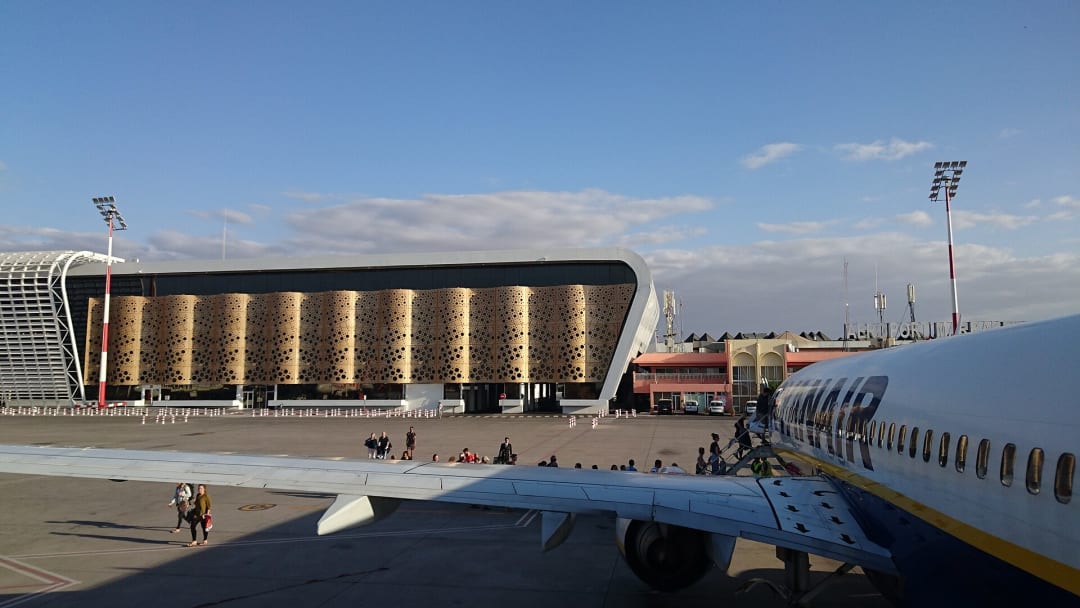
A first trip to Morocco is an intense encounter: the colours of the souks, the call to prayer above the rooftops, the smell of warm bread and spices, the hospitality of a tea offered as soon as you arrive. It is also a country with different customs, where a little simple knowledge avoids plenty of misunderstandings. Money, phones, transport, clothing, haggling, tipping: here is everything we explain, on the drive from the airport, to travellers discovering Morocco for the first time.
Before you go
- Formalities: citizens of many countries, including the European Union, Switzerland, the United Kingdom, the United States and Canada, can enter without a visa for a tourist stay of up to 90 days with a valid passport. Always check the requirements for your nationality before booking.
- Travel insurance: essential, with medical assistance and repatriation.
- Power sockets: 220 volts, standard European two-pin plugs.
- Time zone: Morocco runs on GMT+1 for most of the year and switches back to GMT during Ramadan. Check the times of your flights and transfers around those dates. Our guide to direct flights from Europe details the difference for each country.
Money
The Moroccan dirham generally cannot be bought before you travel: you change money on arrival. Cash machines are plentiful in towns and at the airport, and exchange offices offer fair rates.
| Payment method | Where it works | Our advice |
|---|---|---|
| Cash in dirhams | Everywhere, essential in souks and taxis | Keep small notes and change |
| Bank card | Hotels, larger restaurants, some shops | Tell your bank, carry two cards |
| Euros in cash | Some tourist services | Handy as a backup, but the dirham is the rule |
Phone and internet
Local SIM cards are cheap and sold at the airport and in the operators’ shops on presentation of your passport. A few gigabytes are enough for maps, WhatsApp and translations. Wi-Fi is available in most riads and hotels, but it can be patchy in the mountains and the desert.
Languages
Moroccan Arabic, Darija, is the language of the street; Amazigh, or Tamazight, is spoken in the Atlas and the south; French is widely used, and English is growing in tourism. A few words always go down well: salam for hello, shukran for thank you, la shukran to decline politely.
Clothing and customs
- Clothes covering shoulders and knees are appreciated in the medinas, villages and religious sites. On Agadir’s beaches and in hotels, dress as you like.
- Mosques are generally closed to non-Muslims. The notable exception is the Hassan II Mosque in Casablanca, visited with a guide. The madrasas, former Koranic schools such as Ben Youssef in Marrakech, are open to everyone.
- Photos: always ask before photographing someone. Some refuse, others ask for a small coin.
- On Friday at midday, the day of the main prayer, some shops close for a few hours.
- Alcohol is available in licensed hotels, restaurants and bars, but not in most cafés and restaurants in the medina.
Haggling, a way of life
In the souks, prices are not displayed: the discussion is part of buying. Stay cheerful, set yourself a maximum price, do not name a figure if you do not intend to buy, and do not be afraid to walk away: that is often when the seller makes his best offer. In fixed-price shops, restaurants and for services booked in advance, there is no haggling.
Getting around
This is often where first trips get complicated. A few pointers:
- On arrival, book your transfer: you avoid tired haggling outside the airport and wandering lost in the medina. Our guide to the Marrakech airport transfer explains the options.
- In town, petit taxis are handy and cheap; ask for the meter. See our guide to taxis in Marrakech.
- Between cities, the train links Marrakech with Casablanca, Rabat, Fes and Tangier; CTM and Supratours buses serve the rest of the country; a private driver lets you stop wherever you like. Our guide to private tourist transport in Morocco compares them all.
- Driving yourself is possible but takes confidence: read our rules and tips for driving in Morocco.
Everyday health
- Water: drink bottled water, available everywhere.
- Sun: a hat and sunscreen, even in winter.
- Food: delicious and generally safe; in the first few days, favour cooked dishes and fruit you peel.
- Pharmacies: plentiful, with helpful pharmacists and a late-night pharmacy in every district.
Small scams to know about
- The fake guide who tells you “the square is closed” or “it’s this way”: smile and keep walking.
- The henna tattoo applied without your consent and then charged at a high price: refuse firmly from the start.
- The taxi without a meter quoting an outrageous fare: ask for the meter or agree the price before getting in.
- The tannery or cooperative that is “special, today only”: the visit always ends in a shop.
None of this is dangerous, and the vast majority of Moroccans you meet will simply be welcoming and curious. For the full picture, read our article is Morocco safe?
Tipping
Tipping is not compulsory, but it is customary for porters, guides, drivers and restaurant staff. Our guide to tipping in Morocco gives concrete benchmarks.
When to go, and during Ramadan
Spring and autumn are the best seasons for a first trip; winter is mild in Marrakech and Agadir. During Ramadan, the country moves to a different rhythm: our article on travelling in Morocco during Ramadan explains how to make the most of it.
Book a stress-free arrival
The best advice for a first trip fits in one sentence: secure your arrival and the rest will follow. The Marrakech airport transfer, the Agadir airport transfer or the Essaouira airport transfer await you with a sign bearing your name and a fixed price. To discover the city from day one, the Marrakech guided tour is ideal. Our fares are on the private taxi in Marrakech page, and we answer all your first-time questions from the contact page.