Most travellers spend only one night in Merzouga: they arrive in the late afternoon, set off by camel, sleep at camp and leave after sunrise. That is already a lot, but it misses a rich region: a Gnawa village where music is played every day, a seasonal lake where flamingos sometimes land, the Rissani souk, the fossils of Erfoud, and dunes that change colour every hour. Here is what there really is to do around Erg Chebbi, for one night or three.
In the dunes
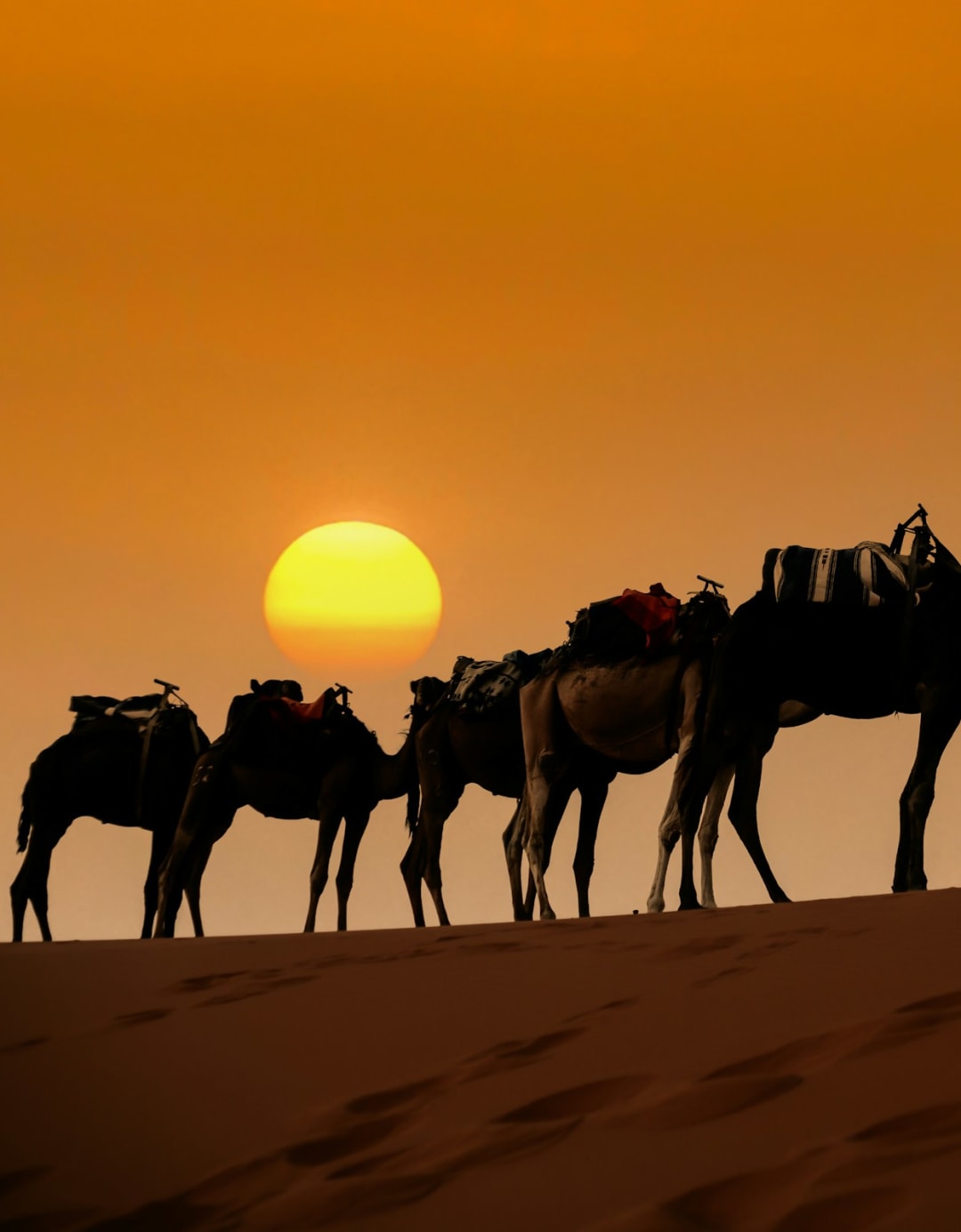
The sunset caravan
This is the essential experience: about an hour by camel to reach the camp, arriving on the ridges just as the light turns the sand red. Our guide to camel rides explains how to get on, what to wear and how to recognise a good operator.
Sunrise from a big dune
The brave climb one of the high dunes near the camp before dawn. The climb is steep in the soft sand, but the sight of the shadows stretching across the erg is well worth the effort. Allow twenty to forty minutes depending on the dune.
Sandboarding
Sliding down the slopes on a board is open to everyone, children included: you fall onto soft sand. Most camps and inns lend boards.
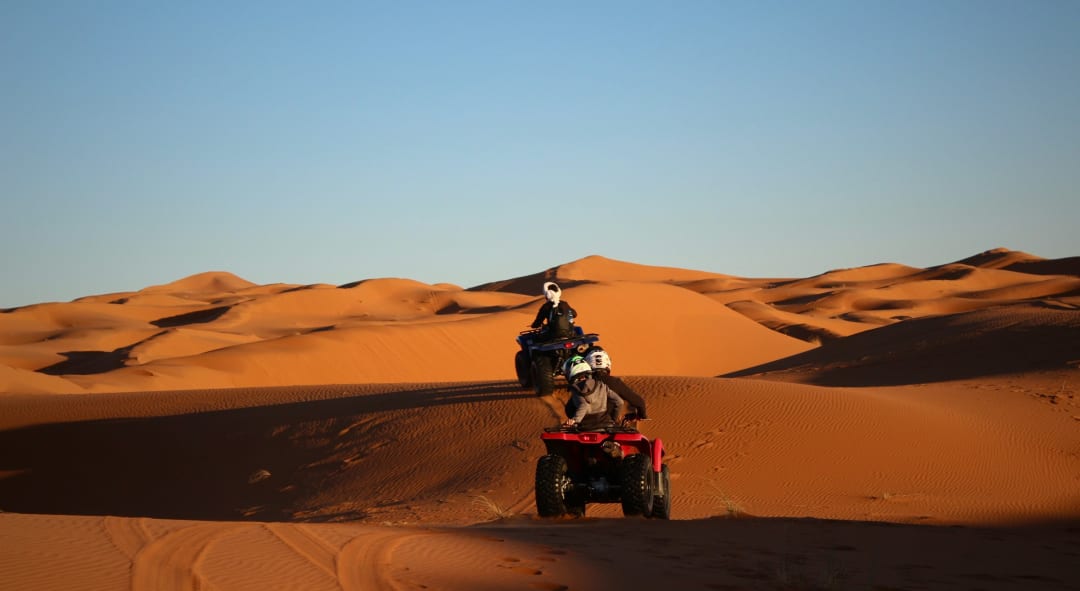
Quads, buggies and 4x4s
Quad and buggy outings are offered around the erg, away from the camp areas. A half-day 4x4 tour of the erg shows the varied landscapes around the dunes: black stony plains, small oases, old mines, nomad camps.
Around the dunes
Khamlia and Gnawa music
A few kilometres south of Merzouga, the village of Khamlia is home to Gnawa families, descendants of people who came from sub-Saharan Africa. Musicians welcome you over tea and play Gnawa rhythms on the guembri, iron castanets and drums. It is a living encounter, not a staged show, and you leave a contribution for the musicians.
Dayet Srji lake
North-west of the dunes, this seasonal lake only fills after rain. Some years it attracts flamingos and many migrating birds; in others it stays dry. Your driver will tell you whether it is worth the detour.
Nomad families
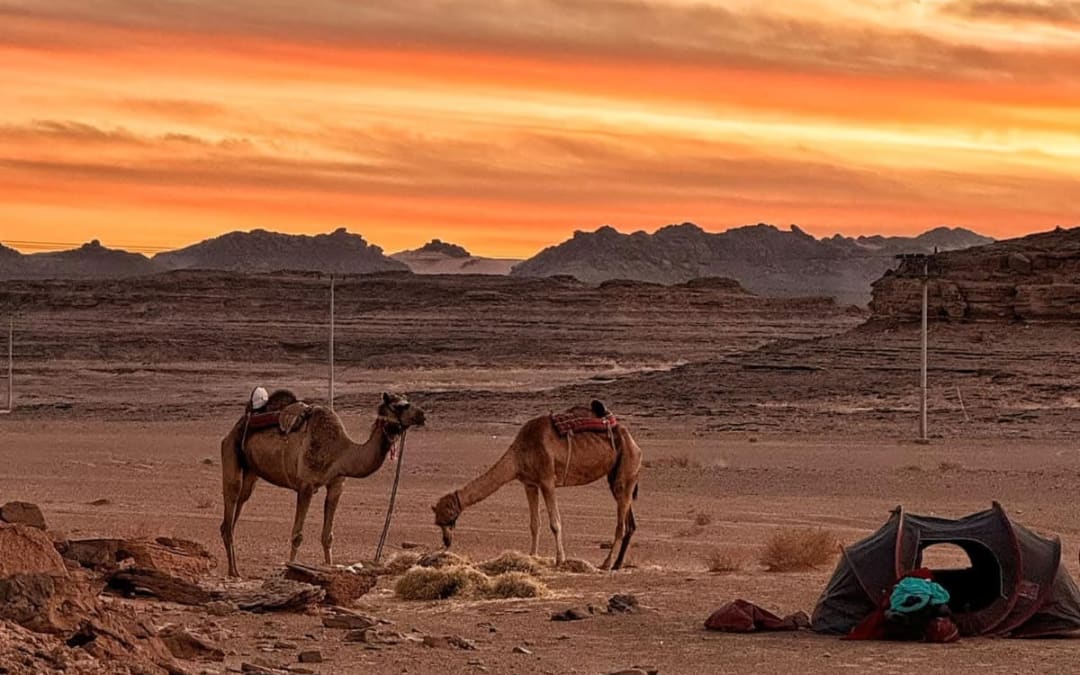
A few families still live in tents around the erg with their flocks. A visit arranged by a local guide, over tea and bread baked in the sand, shows their way of life, as long as you stay discreet and respectful.
In the region
- Rissani, about forty kilometres away, the cradle of the Alaouite dynasty, with its ksar and a large, lively souk where donkeys and sheep are still sold.
- Erfoud, the fossil town: the fossil marble workshops show how the region’s ammonites and orthoceras are worked.
- The Tafilalet palm groves, among the largest in Morocco, watered by ancient underground channels.
How long to stay?
| Time there | What you can do |
|---|---|
| One night | Sunset caravan, night at camp, sunrise |
| Two nights | Plus: Khamlia, sandboarding, a 4x4 tour of the erg or Rissani |
| Three nights | Plus: nomads, Dayet Srji lake, a day of rest in the dunes |
One night covers the essentials, but a second night changes the experience completely: you enjoy the desert without watching the clock. It is the format of our 6-day southern Morocco tour.
Where to sleep in Merzouga
Two options combine well: a night in a camp among the dunes, and a night in an inn at the foot of the erg, with a pool and a proper room. Camps range from traditional to comfort camps with private bathrooms; our article on sleeping in the desert compares them.
How to get there
Merzouga is about 560 kilometres from Marrakech, nine to ten hours on the road via the Tichka, Ouarzazate and the Dades valley. Our articles Marrakech to Merzouga and the road from Ouarzazate to Merzouga describe the journey and its stages.
Fossils and minerals: buying with confidence
The Erfoud and Merzouga area is rich in marine fossils hundreds of millions of years old: ammonites, trilobites, orthoceras. You find them everywhere, by the roadside as in the workshops. To avoid resin copies and over-restored pieces, buy in a workshop where you can see the stone being worked, and ask what has been reconstructed. A genuine fossil is often more modest than it looks in photos.
Photographing the dunes
The light changes very fast in the desert. The best photos are taken in the hour after sunrise and the hour before sunset, when shadows draw the crests. At midday the sand looks flat and white. Protect your camera from the wind, change lenses in shelter, and remember to photograph the starry night too, with a small tripod set on the sand.
Booking
Our 3-day Merzouga desert tour includes the caravan and the night in camp, and our 4-day tour leaves a whole morning for activities around the dunes. For a longer stay or a one-way trip, the private transfer from Marrakech to Merzouga drops you at your inn or at the caravan starting point.