Sleeping in the desert is often the strongest memory of a trip to Morocco. But behind the words “bivouac” or “luxury camp” lie very different experiences: a shared tent with communal washrooms, a private tent with a bathroom and a real bed, or a night almost under the open sky. Location matters too: a camp deep in the dunes has nothing in common with one set up beside the road. Here is how to choose, what happens during the evening and the questions to ask before booking.
The three main types of camp
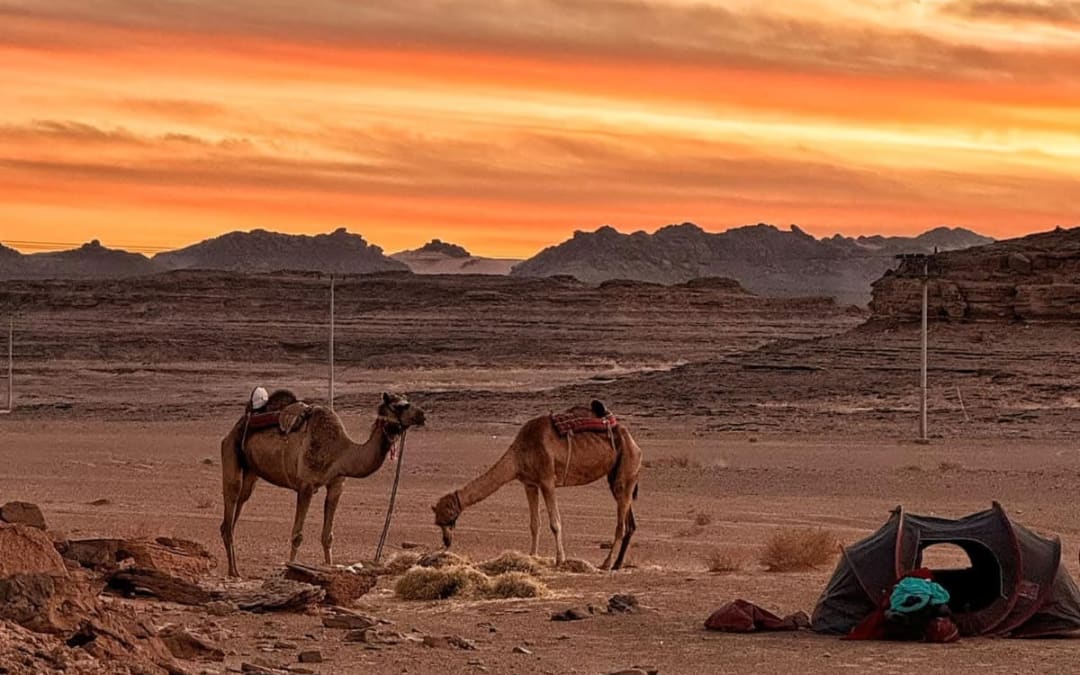
The traditional camp
Berber tents of wool or canvas, often for two to four people, with mattresses or simple beds, and shared washrooms a few metres away. Comfort is basic, but the atmosphere is often the most authentic: a small number of tents, dinner around the fire, impromptu music. It is the most common option on classic tours.
The comfort camp, or “luxury camp”
Larger private tents with a real bed, linen, an en-suite bathroom with shower and toilet, solar electricity and sometimes heating in winter. Dinner is served at a table, in a large shared tent or outdoors. It is the choice of families, travellers who want a good night’s sleep before a long drive, and couples celebrating something.
The nomad night or open-sky night
A few camps offer a more rustic night: a nomad tent, a mattress under the stars, a meal cooked over the fire. It is magnificent on a mild, clear night, much less so in winter or when the wind blows sand.
| Traditional camp | Comfort camp | Nomad night | |
|---|---|---|---|
| Tent | Shared or private, simple | Private, spacious | Rustic or open-air |
| Washrooms | Shared | Private, in the tent | Very basic |
| Electricity | Limited | Solar, sockets | Rare |
| Best for | Atmosphere, small groups | Families, comfort, winter | Adventure, mild nights |
Location: the most important question
A camp “in the desert” can sit deep in the dunes, an hour’s camel ride from the road, or at the edge of the erg, reachable by car. Both have advantages: the first is more beautiful and quieter, the second more practical with children or luggage. What matters is knowing before you book, so you are not surprised by village lights on the horizon.
How the evening goes
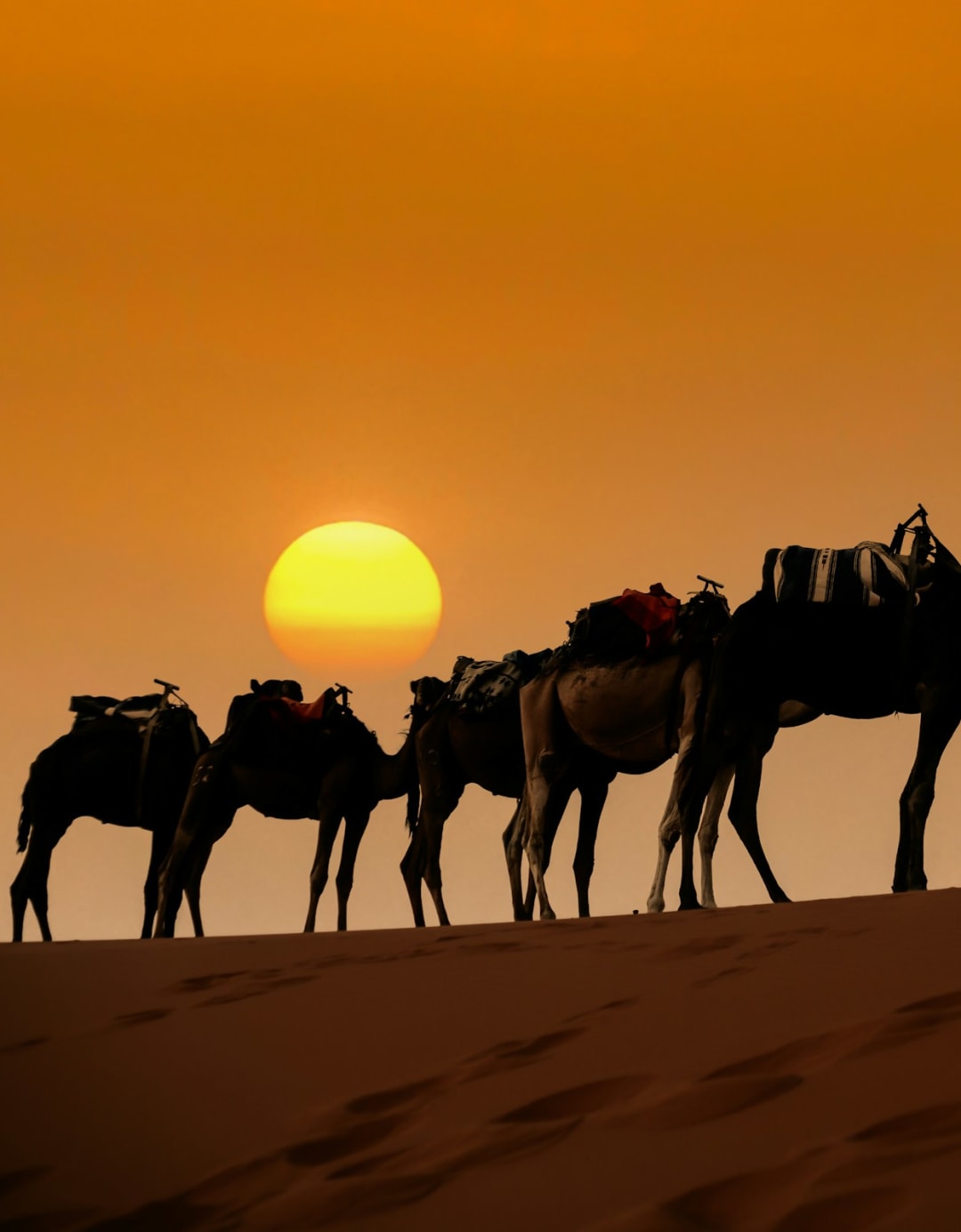
- Arrival in the late afternoon, by camel, 4x4 or on foot depending on the camp, just before sunset.
- Sunset from a nearby dune, with mint tea.
- Dinner, often soup, a tagine or couscous, and fruit.
- The evening around the fire, with drums and songs from the camp team.
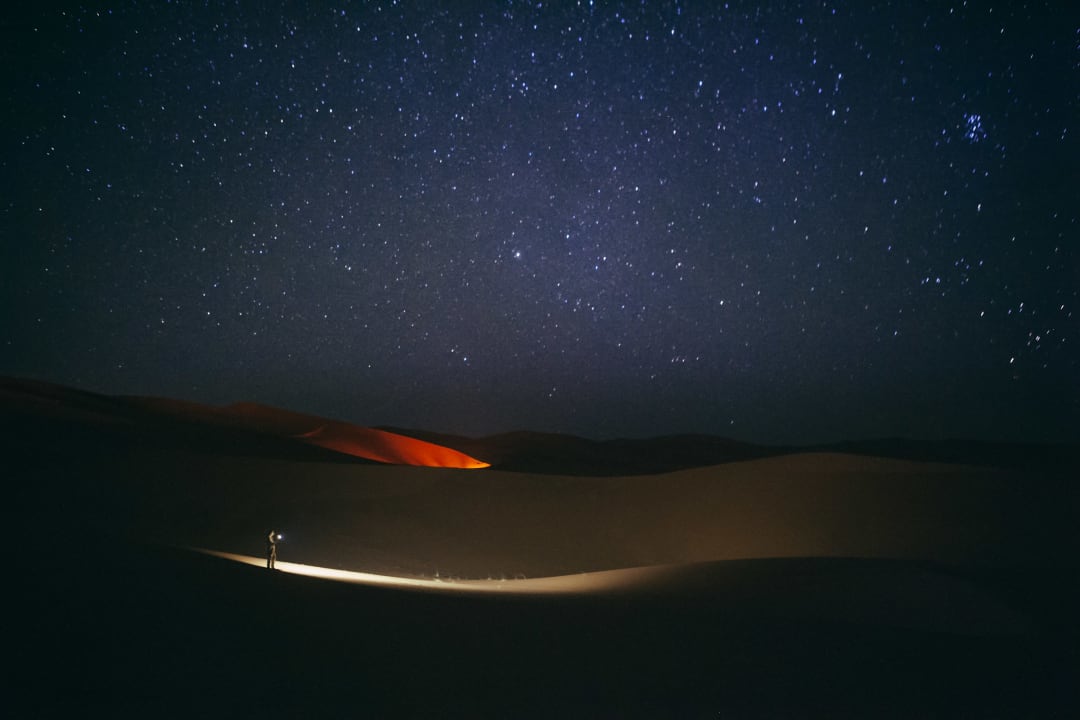
- The night, and the sky: far from any light, the Milky Way is visible to the naked eye.
- Sunrise, then breakfast and the return to the vehicle.
Questions to ask before booking
- Where exactly is the camp, and how do you get there?
- How many tents does it have, and what is its maximum capacity?
- Are the toilet and shower private or shared?
- Is there electricity to charge a phone?
- Are the tents heated, or supplied with thick blankets in winter?
- Does the luggage stay in the vehicle or is it taken up to the camp?
Merzouga, Chigaga, Agafay: what are the differences?
In Merzouga the choice of camps is widest, from simple camps to very comfortable ones, and they are easy to reach by road. At Erg Chigaga the camps are fewer and more isolated, reached by 4x4. In Agafay, 45 minutes from Marrakech, the camps stand in a stony desert, often with a pool, and suit a night without a long drive. Our Moroccan desert guide compares the three, and our article on getting to your Agafay camp explains how to arrive at night.
Sleeping well in the desert
- Nights are cold from October to April: keep a warm layer and a hat within reach.
- The wind can rise at night; close the tent properly and protect your phone and camera from the sand.
- A head torch is very useful for getting to the washrooms.
- Our packing list covers the small bag to bring for the night.
Respecting the desert and its people
The desert looks immense, but it is fragile. Take your rubbish back to the vehicle, use water sparingly, as it is often brought from far away, and keep your phone’s music to yourself. Camp teams often come from the nearby villages: a word in Arabic or Tamazight, a question about their life and a tip left when you leave are always appreciated. And if you meet nomad families, always ask before taking photos.
One night or two?
One night is enough for the sunset, the evening around the fire and the sunrise. A second night, at camp or in an inn at the foot of the dunes, lets you enjoy a whole day in the desert without watching the clock, and it is often the one people remember best.
Booking
Our 3-day Merzouga desert tour includes the caravan and the night at camp, with a choice of comfort level to suit you. For a first night without a long drive, our Agafay desert evening can be extended with a night in a camp. For Erg Chigaga or a specific camp, write to us from the contact page.